Sunday, 15 June 2014

World Cup 2014 & displacement behaviour

Hands on head after a missed open goal- displacement behaviour
Keep your eyes open this world cup for displacement behaviour.  It is such a common phenomenon that you may never have really paid attention to it before but in almost every game at certain key moments you will see it.

Those key moments relate to missed goals.  Now, anyone who watches or plays football knows that some missed goals are more painful than others.  The shot that misses the goal by a large margin and which, from the moment it leaves the boot, never looks like going close to goal is never as disappointing as the one that only just misses the target.  When we fully expect the ball to go into the back of the net but at the very last moment the ball veers away or goes past the post and not inside it, an automatic reaction occurs.  

This automatic reaction is one we all know well.  Consider this: excitement builds as the expectation of a goal rises, only to be suddenly and forcefully opposed by the realisation that it has missed and the sense of elation is simultaneously contradicted by one of disappointment.  This process is marked by the hands of the player (or often spectators too) suddenly being raised to the head and the fingers used to comb the hair or scalp in a smoothing or caressing action.  

But why does this happen?  Well, it marks disappointment and a defeated expectation but there is more to it than just this.  Physiologically speaking it indicates that two contradictory impulses are being experienced and producing a behaviour that has in fact no direct relevance to the situation in which it occurs.  I mean, how could raising your hands and passing them through your hair or resting them on your head be of any real use?

Most people fail to really pay attention to this action because it is so common or automatic that we take it for granted as a natural phenomenon of no significance.  But when one stops to think that it occurs at those specific moments when the tension between excitement and disappointment is at a certain point of balance, it assumes new meaning.  It is a classic case of a displacement behaviour, the purpose of which is to deactivate overloaded circuits and act as a reset so that the processing of fresh incoming sensory data can be resumed.  

As well as this act of self-grooming behaviour we often see players grooming each other too.  A player who has missed a goal and looks disappointed will often have his head touched or stroked by a team mate.  Grooming is just an automatic and innate human behaviour derived from our ancestral heritage.

You will see many cases of self-grooming (and mutual grooming) during this World Cup so keep your eyes peeled - especially for those specific moments when celebration behaviour and realisation of failure are at a point of balance and produce displacement actions.

Sunday, 8 June 2014

Thwarted again!


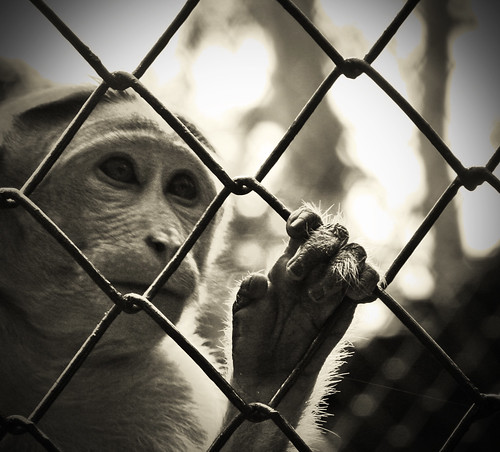
When ethologists, who study animal behaviour, looked into the weird behaviours that are typical of many animals raised in captivity they were puzzled.  For example, they witnessed animals biting at their own fur, feathers or hair or at those of other co-caged animals. The range of animals who expressed this sort of thing included parrots, sheep and mice to name but three.  They were puzzled because they could see no relationship to the weird behaviour and the environment in which it took place.  In short, the behaviour could not be directly said to be related or caused by the situation.  It was from this puzzlement that the concept of displacement behaviour emerged.

Three mechanisms are believed to be responsible for these weird displacment behaviours: (1) early environmental deprivation (2) the disruption of habitat-dependent processes and (3) the thwarting of behavioural response rules.  

Firstly, cases of environmental deprivation include animals reared in isolation or away from maternal care.  Secondly, the disruption of habitat dependent processes may include not giving animals the right kinds of foods or nesting materials so that behaviours dependent upon these environmental aspects cannot be properly expressed. Thirdly, animals in captivity are often physically prevented from behaving in natural ways such as a cage that restricts movement or which prevents it from achieving an ongoing goal.

The basic idea is that when an animal is continually frustrated or where the environment means that it cannot find an adaptive solution to an environmental problem the brain wiring is disturbed and these odd behaviours come to the surface.  But why, for example, hair pulling and not a different behaviour emerges is, as yet, unknown.  However, the link between animals in captivity showing this kind of a problem and people who pull out hair seems one too big to overlook in my opinion.

If there is one thing I would hope to get from this blog, it is that more and more people consider these aspects when they seek to understand hair pulling.


References:
 
Akgul, Y., Agaoglu, Z.T., Kaya, A., Sahin, T., (2000) The relationship between the syndromes of wool eating and alopecia in Akkaraman and Morkaraman sheep fed corn silage and blood changes (haematological, biochemical and trace elements). Israel Journal of Veterinary Medicine 56: 23-37.

 Bordnick P.S., Thyer B.A., Ritchie B.W., (1994) Feather picking disorder and trichotillomania: an avian model of human psychopathology, J. Behav. Ther. Exp. Psychiatry 25 (3) (1994), pp. 189–196.

Dias R, Robbins T.W, Roberts A.C (1996) Disassociation in prefrontal cortex of affective and attentional shifts. Nature 380: 69-72.

Kalueff, A.V., Laporte, J.L., Bergner, C.L. (2010): Neurobiology of Grooming Behaviour (Cambridge University Press)

Schrijver N.C.A., Wűrbel, H.: (2001) Early social deprivation disrupts attentional, but not affective, shifts in rats. Behav Neurosic 115: 437-42.

Wűrbel H (2001): Ideal homes? Housing effects on rodent brains and behaviour. Trends Neurosci 24:207-11.

Sunday, 1 June 2014

Observations On Young Children

Watching children play or simply behaving in an environment in which they feel relaxed is very informative - as anyone who knows of Piaget's work can testify to.  It is informative in two ways.  Firstly, it is a point of reference to one's own early childhood and secondly it is possible to see in these early stages the way children try to navigate their environment, make decisions, seek comfort and affirmation from others around them. The family environment is the one in which the children will learn the rules of social behaviour, what can and cannot be performed and how to interact with others. 

I spent a few days with my nephews this week - aged 1 and 6 respectively.  They are happy, lively children but not immune to tantrums when their simple desires or wants are thwarted in some way or another.  But on the whole this is quite rare.  It was particularly interesting to see the younger one roaming freely about the house and exploring the nooks and crannies of the lounge and kitchen spaces.  When a child explores its space it does so without inhibition or assumptions towards what it should or should not do.  This open curiosity and undisrupted approach to the world contrasts well with children and animals not raised in such accepting and welcoming environmental conditions.

Children and animals in captivity do not get the chance to explore the world in such a free way.  Their species specific behaviours are constantly interrupted or interfered with.  They are not able to fully express themselves towards their environment and with this comes a retardation of their powers to engage with the world.  This means physical performance and physiological setting points are non-optimal.

Captivity means that an animal or human will feel constantly thwarted, as if the world is continually refusing to permit them to be themselves - or simply saying 'no' at every twist and turn.  The conditions that support successful engagement with the environment are not there and loss of confidence may become pathological.  In such cases the organism's behaviour will no longer be directed towards objects in the world around it but towards itself.

Disengagement with one's environment is a sure precursor to the appearance of self-directed behaviours like hair-pulling.  It constitutes a form of disturbance whereby continuity of expression and interaction has been disrupted.  A child able to roam freely and approach family members without fear of rejection or avoidance of eye contact or touch is much less likely to feel thwarted or displaced.  Fortunately for my nephews, their upbringing is one that allows them the freedom and affection they need to become healthy human beings.  Sadly, this is not the case for everyone.

Sunday, 25 May 2014

Zen Buddhism and displacement behaviour

Korean symbol for Zen
There are many psychiatrists who feel that the perspectives offered by Eastern philosophy are helpful and support the efforts of Western practitioners in mental health.

Whether it be in promoting meditation or yoga or simply utilising basic breathing techniques - eastern exercises that assist coping, focusing and relaxing are all useful tools.

Behind these approaches is an eastern philosophy that takes a very different stance from the Western scientific tradition.  In the West the only valued perspective is the objective one.  To understand something one must take a detached viewpoint and aim at removing oneself - one's feelings, emotions, biases and prejudices - from understanding the world.  In contrast, the Eastern tradition upholds that nothing can be truly know or understood without engagement, feeling and immersing.

Overcoming detachment is important to feeling more engaged with the world and with one's emotions, so it is unsurprising that eastern philosophy was so approved of by Jung, much to Freud's annoyance.  He believed in the hard scientific notion that psychology should stick to hard facts and not align itself with ideas and concepts that threatened to take it beyond the realm of science.

Detachment means that one places oneself outside what one is focused upon.  The object - that which is focused upon - must be held distinct from subject - that which is doing the focusing.  This goes to the heart of western scientific understanding that was philosophically enshrined by Rene Pascal's 'I think, therefore I am'.

This object-subject distinction is something that is part of the human experience.  We always feel a certain reflective distance from the world which means that in certain exceptional circumstances we speak of 'letting ourselves go', or 'forgetting myself '.  Usually this implies we have had a good time and this forgetfulness has allowed us to lose self-consciousness or detachment and allowed us to enter into the world with less reticence, shyness or embarrassment. In fact, we may long to feel that freedom all the time!

The problem for people with mental disorders is where the object-subject relationship between world and self becomes fraught with problems.  Freud wrote about the super-ego (or basically, conscience) that imposes an ideal morality upon the ego.  This torturing voice of self-criticism means that the individual cannot relax or feel at peace and my develop compensatory behaviours in order to achieve this.

This lack of harmony between the object (how we perceive ourselves) and subject (that which does the perceiving) is surely important to understanding self-directed or displacement behaviours too.  Automatic behaviours aim at bypassing the subject-object character of consciousness.  People lose themselves in automatic hair pulling, for example, and derive a sense of wholeness from it.  In short, they derive release from it but when they regain their subject-object awareness they later regret it whilst still longing for the peace that hair pulling brought them.  This viscious circle can go on for years!

Maybe Eastern approaches can and are being brought to bear on hair pulling and other unwanted behaviours.  Offering people alternative ways to switch off their minds, of attaining mental peace and a relief from the pain of subject-object detachment is important.  And in this stressful environment of modern living such relief may be ever harder to find for many people.
 

Sunday, 18 May 2014

Mother always knows best...er, maybe not!

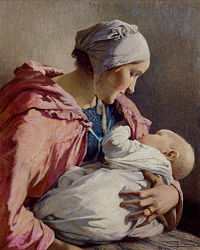
Sweet Dreams, by Belgian artist Firmin Baes
An interesting study was undertaken by Galski (1983) which noted that unhealthy symbiotic relationships may partially account for hair pulling. A symbiotic relationship is one where the boundaries of separation and independent functions become blurred. For example, where a mother makes her child dependent on herself as its primary need gratifier, so that all needs must be met through her, then learning that leads to mastery over the environment and independent functioning is prevented. As a result important stimuli are not presented at appropriate times and necessary types of interactions do not occur.

It is very possible that a child in such a situation will find itself over-stimulated by such a parent’s constant supervision which it may have no adaptive means to prevent, neither by a show of aggression (saying 'No!') nor proximity withdrawal (leaving home). Access to external objects in order to meet personal needs or solve personal problems may require protracted emotional engagement with the mother, who may also assume control over the use and handling of objects. As a result innate mechanisms that would be engaged under normal conditions are inhibited in their development. In Winnicott’s terms, the mother has failed to support the child as a suitable transitional object so that the child is unable to make the transition towards independent functioning within its cultural context.


Reference: Galski, T. (1983) Hair Pulling (Trichotilllomania), Psychoanal Rev, Vol. 70, 3, 331-46.

Saturday, 10 May 2014

Hair pulling in the movies: Young Adult

On TV this week I caught a movie called Young Adult, starring Charlize Theron.  Mostly, movies and psychological realism do not go well together which is why I was suprised (blown away in fact) that hair pulling featured.

Theron plays the character of a rather disturbed woman called Mavis Gary, who moves back to her hometown to win back an ex-boyfriend.  The trouble is he and everyone else in the town have moved on in their lives, whereas her development is stuck in the past and like an angry teenager she spends most of her time berating others and putting them down. 

Hair pulling appears when she is sitting in bed, watching TV (see the previous post on pulling cues).
We watch as Mavis toys with her hair, searching for something until she eventually finds a suitable hair and plucks it.  She then studies the strand and root befor laying it on the table next to the bed where there are a collection of other hairs pulled earlier.  The camera pans to reveal a small bald spot on the back of her head.

In another scene Mavis visits her parents and whilst sitting at the table she goes to pull at her hair.  Her father asks, “Are you still doing that?” before her mother chimes in with, “It’s just that your hair is so beautiful…”
 
Trichotillomania doesn’t make another appearance in Young Adult, and it never features as anything more than an add-on behaviour to Mavis' complex personality.  But the fact that it was included in the movie is worth recording.  I know some bloggers have expressed dismay that hair pulling should be associated with a character (played brilliantly by Theron) bearing such serious personality issues but I do not.  I think Mavis' borderline personality problems, her extreme perfectionism and social isolation in adulthood reveal that these were her issues as a teen too. If so, her desire to escape her hometown and her extreme dissatisfaction with her own status in life reveal adaptive failures that might well lead to body directed behaviours. 

Mavis is caught in two minds throughout the film - she hates her hometown, but returns there; she wants to be viewed as a success by the world, but doesn't feel like one; she dreams of perfection, but her life is flawed.  At the very end she completes a narrative in which the protagonist achieves a happy ending - but her identification with such an ending jars with the film's own ending which sees Mavis scrutinizing her damaged car in a roadside carpark.  This dislocation towards one's environment is important to understanding hair pulling in my opinion. Hair pulling is what emerges when a prolonged environmentally rooted contradiction can find no resolution.
 

Sunday, 4 May 2014

Hair pulling cues


ready, set....pull?
Cues for hair pulling in humans have been studied, most notably by Christenson et al. (1993).  Two distinct types of cues were recognised.  These are as follows:

Type 1. negative affect e.g. anger, embarrassment, shame, depression , anxiety, emotional hurt.

These type one cues point to extreme frustration, where a situation is leading to an emotion or state of mind that the individual cannot cope with and nor can s/he escape from it.  In other words, the situation cannot be transcended and the mind becomes trapped or stuck in an undesirable state. 

Type 2. sedentary contemplative situations, e.g. feeling alone, tired, relaxed, getting too little sleep.

In these type two situations a natural state of transition - whereby feeling alone or tired should lead to seeking social contact or sleep - has not been achieved.  Indeed, such a transition may be being avoided or negated.  Maybe a loss of continuity is feared; a loss of temporal identity.  The bottom line is that the organism falls back upon the body to offer comfort and exercise control over its immediate environment.

Cognitive behaviourists when dealing with hair pulling will try to remove pullers from those situations that seem to cue the behaviour.  They might tell the person to sit in a different chair than they would normally, as if the problem had something to do with the room's furnishings!!  This kind of lack of professional understanding is rather shameful in my view.   Instead, they should be focused on the function of displacement behaviour and how its stereotypical manifestation indicates the presence of a real problem in the patient's history which relates to their earlier environmental adaptation.  Psychology can only have credibility to the extent that it fulfills itself as a true science and does not confuse band aids for cures.