Saturday, 26 October 2013

Hair pulling in ancient literature - Part One: The Bible

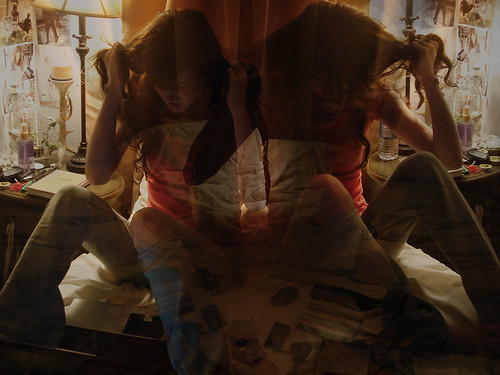
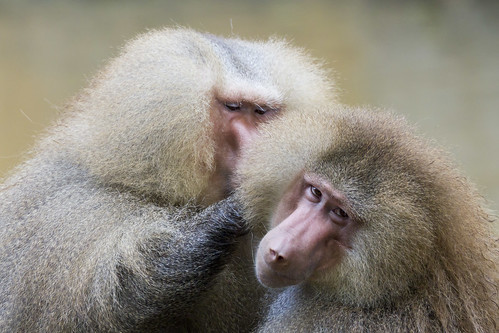
Hair pulling in various forms features heavily in the works of ancient literature and also in later English literature too.  In the next series of blog posts I will cover some of these references to pulling hair and attempt to comment on how hair pulling is depicted, the situations in which it occurs and what this possibly reveals to us about human nature.
    Since the Bible is a text at the very heart of Western culture it is fascinating to extract instances of hair pulling from it, considering that hair pulling is a behavior that is largely unrecognised in modern society.  
    In fact, biblical references to hair are not hard to find.  In the King James Bible there exist eighty references to hair - both in relation to animals and humans. (There are also 11 separate references to locks of hair.) However, there is only a single primary reference to actual body directed hair pulling itself, and this appears in the Book of Ezra, 9:3-7:

When I heard this news, I rent my robe and mantle, and tore my hair and my beard, and I sat dumbfounded; and all who went in fear of the words of God of Israel rallied to me because of the offence of these exiles.  I sat there dumbfounded till the evening sacrifice.
   Then at the evening sacrifice, I rose from my humiliation and, in my rent robe and mantle, I knelt down and spread out my hands to the Lord my God and said, ‘O my God, I am humiliated, I am ashamed to lift my face to thee, my God; for we are sunk in our iniquities, and our guilt is so great that it reaches high heaven.


The background to this odd behaviour, which entails tearing his clothes and his hair, is when Ezra (a very devout man) learns that people returning to Israel have not kept themselves sexually apart from non-jews during their time in exile.  Fearing the wrath of God for breaking His covenant Ezra has some kind of fit that involves yanking out his hair and this is then followed by some kind of trance state or unconsciousness.  The episode seems to be brought on by an extreme internal conflict whereby the God fearing man suddenly feels contaminated by the sins of his people. The sudden manic tearing of his clothes, and the self-directed pulling out of his head hair and facial hair would on one level appear to be an attempt to rid himself of contamination, to pick off or groom away unwanted particles adhering to his body.  And yet we know that what ails him is not physical contamination but a sense of a tainted spirit.   From this, Ezra's sense of true helplessness is conveyed by  (a) using a contaminated part (his hand) to attempt to clean the whole (body) and (b) using a misapplied physical grooming strategy to achieve spiritual cleanliness.  In other words, not only is Ezra’s hair pulling an inappropriate method to achieve a spiritual effect but it is also symptomatic of a state of mind in which no adaptive solution can be found the problem he faces.  
   The emergence of grooming behaviour during this internal conflict is perhaps revealing.  The Bible is not a work that exemplifies psychological realism but in Ezra's case the hair pulling seems to produce a beneficial effect or neuro-chemical change.  It precedes a state of calmness, which is inkeeping with the notion that endorphins have been released into the blood stream as a direct result of inflicting pain on himself.  Interestingly too, the people around him express no surprise or alarm towards his hair pulling and impute no case of demonic possession to him; hair pulling would seem to be within the normal realm of their common experience of human social behaviour.  Following the incident no further reference is made to Ezra’s hair pulling episode.  Perhaps it marks the continuation of a habitual behaviour that has persisted for years. 
        Rather than viewing his manic episode as a moment of divine interaction between a holy prophet and his God, viewed psychologically it may instead reveal an organism caught in two minds, or two states.  On one hand he yearns to feel righteous and holy but on the other he knows that he shares the sins of his people in the eyes of his God.  The co-existence of these two incompatibles in the same moment therefore negate each other and produce a third alternative state - hair and beard pulling.   In this respect Ezra's case possibly supports the theory that trichotillomania is a stereotypical displacement behaviour.


Saturday, 19 October 2013

Interview questions raised on hair pulling...

A student this week asked me some questions about hair pulling for a project she was working on.  In trying to answer her questions it hit me just how little we really know and investigate this condition.  She asked firstly:

What do you think triggers the beginning of trichotillomania in someone? 
 
My answer to this question was that different fields of psychology have different perspectives on it.  The neurobiologist might point to dysfunction in the basal ganglia and cerebellum which implicate the role of serotonin.  The behaviourist might see it as a random behaviour that results when an environment inadequately enforces normal behaviours so that unintended behaviours develop.  Evolutionary psychology (in which camp I place myself) might view it as a 'mental program' or an innate behaviour derived from man's ancestral past which is triggered under certain conditons.  Those triggering conditions are most threatening during a sensitive period when the young developing organism's brain is becoming wired to its environment.  If the environment is unnatural or inadequate and thwarts, prevents or does not reciprocate and support species specific behviours then a self-directed behaviour might emerge.  But I could not say why hair pulling develops over, say, nail biting or thumb sucking etc.  One of the reasons I could not say is because so little research has gone into this question, if any!  So, I want to put forward some suggestions of my own here for what they are worth.

1. no research has gone into why the lipid fat root is so valued by hair pullers.  This eating behaviour that forms part of hair pulling is often completely omitted from considerations of the condition because the focus is placed instead on coping with the social embarrassment of hair loss.

2. no research has gone into the effect of hair pulling and lipid fat hair root eating on a person's metabolic rate.

3. no research has gone into why certain kinds of hairs and certain areas of the scalp are preferred over others.

I believe that the eating component of hair pulling is an attempt to control or homeostatically regulate in some way the metabolic rate, i.e. that rate at which the body conserves or spends energy.  The implication here is that hair pulling is triggered by environmental conditions which are stressful and which the brain may interpret as conditions in which resources and social support are scarce.  Hair pulling and root eating may be an activity that aims at preserving resources and reducing exposure time to a disadvantegeous situation because it is an activity that: (a) is a form of self-feeding as well as self-grooming (b) is mode of foraging applied to the body (c) is a form of tolerating exposure to an environment in which the indivudual feels powerless by triggering behaviours that utilise grooming and feeding brain circuitry implicated in survival (d) is a way of focusing attention towards the body and away from the world because the act of pulling involves bowing the head and obtaining an object that fills the foreground.  Of course, without research pointing in this direction this is but conjecture on my part. 

The student's second question was:

How would someone with the condition overcome it?  

I suggested that unless hair pulling is engaged with early on and during the developmental period when the brain is becoming wired to its environment then it could well become a lifelong condition.  In other words, the environment needs to be altered as soon as the problem surfaces to address the triggering circumstances.  Maybe family system therapy would be the best place to start.  In short, some sort of environmental enrichment is required - a method successfully employed with captive animals that fur pull.

Maybe the moral here, is that unless we see ourselves as organisms that have developed to be sensitive to environmental signals - as animals are - we cannot hope to understand hair pulling fully.


Saturday, 12 October 2013

Common hair pulling expressions and sayings

Though hair pulling as a self-directed behavior is little known among the general population, references to hair pulling are in fact an everyday part of English colloquial expression.  The phrase, “to tear one’s hair out’ is one commonly used by English speakers and its meaning generally assumed to imply the frustration of an impulse, even by people who may have never pulled hair nor heard of trichotillomania. Indeed, colloquial references to hair are plentiful and the following is very much a truncated list:

To keep one's hair on (to stay calm)
To let one’s hair down (relax)
To make one’s hair stand on end (terrify)
To get in someone’s hair (to annoy)
To split hairs (to argue pettily)
To have a bad hair day (to feel unattractive because one's hair is restive)
To not have a hair out of place (to be tidy)

and, of course, the above mentioned,
To tear one's hair out! (to be at one's wits end)

      It is fascinating that hair references should abound, particularly the way that hair and mental states are so entwined in folk consciousness.  And yet, the idea that hair may play a role in homeostatic regulation and that hair pulling is such a little known disorder is in this context quite surprising.  Hair and hair related actions or grooming behaviours are so much part of what makes us human it is that it is perhaps more difficult to get clear perspective on the function it serves for us - why we do it and the benefits that accompany these actions. 

Sunday, 6 October 2013

Captive States

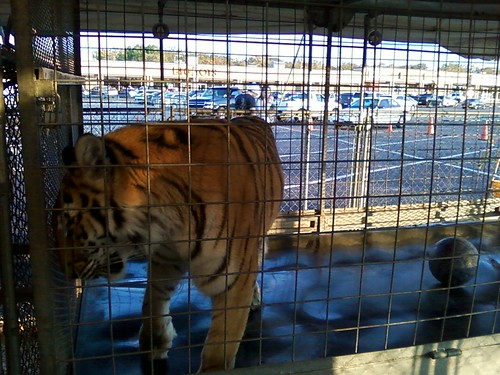
It is amazing that only animals in captivity display repeated or stereotypical behaviour - and not animals in the wild.  Repeating the same actions again and again is something that is thought to characterise a very high percentage of behaviour found in animals living in laboratory conditions (more than 50% by some stats).   Types of behaviour consists of:

  • wool chewing in sheep, where sheep in close proximity chew the wool of the sheep in front
  • steel bar chewing in pigs and cows where enclosures are very small and diet is restricted
  • cage jumping in mice
  • cage pacing where physical space is very limited e.g mink, zoo animals etc.

     Many factors have been given in trying to understand these events.  But the concept of thwarting is key.  Animals fed on artifical diets (e.g. liquid diets) may never get to experience a 'gut full' feeling, so they remain in feeding mode constantly.  This may spill over onto objects that are not food related e.g. steel bars.  In fact diet is very important in how an animal regulates its behaviour because food seeking or oral behaviours are linked to internal assessments by the organism of its energy and nutrient requirements.  Pacing is another common behaviour, especially in animals that have evolved to roam long distances.  Big cats or dogs in pent up conditions will often display this.  Again being prevented from fulfilling natural behaviour patterns means these patterns emerge in ways that betray a stereotypical quality.  Cage jumping in mice is also very common, though some view it less as a displacement behaviour (a behaviour that is expressed because another regular behaviour has been thwarted by the environment) as a direct response to wanting to escape from confinement. 
     Understanding human behaviour in terms of captivity is more difficult.  Humans are rarely kept in cages, except in prisons, and even then it can be argued that man is an adaptive animal with the intellectual ability to understand and regulate his situation.   On the other hand, some people might suggest that all of human life is a form of captivity in as as far as we all have to accept limitations on our natural desires for much of the time.  The point at which everyday repression tips towards producing stereotypical behaviour is what interests me a lot.
    The tipping point seem to be when the environmental possibilities or opportunities for self expression and self-regulation become so restricted that a person is no longer is able to exercise control over his/her state of being.  For example, hair pulling has been found in children who exist in a symbiotic relationship to their parents.  This may mean the parent is so controlling that the child can only express its needs and desires through the agency of the parent figure and has no independent power.  Every need or want must be negotiated via the parent e.g. approval sought, permission granted, compromises made.  This power imbalance and over-dependence means that the child has little chance of regulating its own internal state.  Hair pulling has also been found in those children where incest has occurred.  Inability to avoid incest (or the sexual behaviour of parents), itself a very important aspect in ensuring genetic health of offspring, means that something very fundamental has been violated.  In short, the capacity to control homeostasis - the ongoing relationship between internal state and environment is compromised.  This lack of control or self-sovereignty, in the absence of bars, constitutes a mode of captivity.  For what is captivity if it is not the freedom to fulfill one's own needs and determine one's own inner sense of emotional well-being? This is a major starting point for people seeking to better understand self-directed behaviours in humans in my view.


Sunday, 29 September 2013

hair pulling (trichotillomania) - a displacement action?


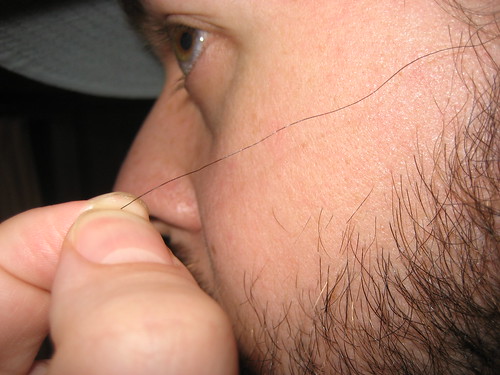
For anyone who may not have heard of hair pulling in humans, here is what it breaks down to:

1. the hand is raised to the head
2. a hair of a satisfying texture is sought out  - usually from the crown area
3. the hair is plucked out
4. the hair is examined, particularly the white root attached (not to get a root is a failure!)
5. the root is rubbed against the lips and sometimes licked
6. the hair root is combed off using the front teeth or simply bitten off
7. the root is eaten
8. the spent hair is discarded

This process can continue – depending on whether it’s interrupted or not – for hours at a time!

One of the predictable consequences of hair pulling is hair thinning and even baldness in those favoured areas of the scalp where pulling takes place.   It can be a source of great embarrassment and awkwardness and for this reason pullers and psychologists tend to overfocus on symptoms of hair pulling rather than examining its root causes (no pun intended).   This can mean people wearing hats, using hairnets, putting on gloves or keeping their mouths busy with gum, among other barrier techniques.  But to me, this response misses the mark and what’s more these methods are rarely effective.
  The point is that people are pulling their hair out because it is satisfying in some way – it makes them feel good!   There are a number of reasons this may be the case:

a. yanking out a hair can be painful, but like all painful activities after a while (think of jogging or extreme physical exertion) endorphins are released and these raise the pain threshold.

b. The act of rubbing, licking and removing the hair root involves a lot of oral manipulation which may increase saliva production.  If you can imagine anticipating your favourite food when saliva production occurs then you can get something of an idea as to why the 'tasty' lipid fat root is so prized.  It is also made of fat and fat is something that humans tend to enjoy.

My take on hair pulling is that is has homeostatic benefits -  which means that the activity helps the person regulate their internal physiological state in some way.   There has not been too much experimentation on this unfortunately.  (Partly because it can be hard to find subjects who hair pull to participate.)  But it would be interesting to find out:

i. are endorphins released which reduce the effects of pain?

ii. do cortisol levels (i.e. stress levels) decrease during hair pulling bouts?

iii. are there any other hormonal changes related to hair pulling, such as oxytocin release?

The other thing I would like to find out relates to the title of this blog page – is hair pulling a displacement behaviour.?  In other words, do people do it because a motivation or behaviour has otherwise been thwarted.  For example, thwarted attachment seeking (or grooming) due to a neglectful or rejecting parent may precipitate this form of self-grooming.   In this situation, a desire to approach or achieve comfort is constantly sought as an internal state but in an environment in which it cannot be satisfied.  This kind of mismatch, if occurring for a prolonged period and during a sensitive phase of development, may bring on hair pulling.  The final thing to mention is that the 8 stages above are so commonly observed in people who are hair pullers that it cannot be written off as an idiosyncratic behaviour that a few people coincidentally share.  Instead it can be viewed as a species specific behavioural program that emerges under conditions of prolonged frustration - and it also affects animals in captivity too.  So, the plot thickens….

Saturday, 21 September 2013

displacement - defining terms

Anyone who has studied psychology to a reasonable extent can tell you that it is not a unified field.  As things currently stand, it is divided up into a number of different areas such as social, developmental, evolutionary and cognitive etc.  This is due to the fact it is very new science (or social science is more apt) and is still finding its way in terms of having a single theoretical foundation and being truly scientific, i.e. not merely a reflection of the researcher's personal value system.  Indeed, psychology did not exist till Freud effectively invented it as a form of treatment for patients suffering from 'hysteria'.  Freud set out to create a complete theory of man - a very ambitious project (to say the least) considering the state of technology at the time.  Even now, with fMRI scans the depths we can probe into the actual workings of the mind is very limited.  But this did not prevent Freud having a go and coming up with some key concepts such as transference, projection and displacement.   
     For Freud, displacement behaviour meant something slightly different to what I mean in my blog.  He was using the term to describe a behaviour that is expressed when the desired behaviour has been repressed and which the individual may not even be conscious of.  So, in the Victorian era when sex was taboo (at the public discourse level - privately, they were at it like no one's business!) Freud came across many cases where sexual desire could not be expressed directly. As a consequence he noted behaviour got channeled into alternative actions and from this he was able to recognise fetishes in his patients.
    In this blog my use of displacement behaviour is derived from ethology (study of animal behaviour) and links to the work of pioneers like Tinbergen.  He was one of the first people to notice that some behaviour does not always fit the context in which it emerges and is therefore hard to explain in terms of its relevance to the situation. An ethological definition does not assume, as does Freud, that all behaviour is merely a spill over from a single repressed drive, such as the sex drive or libido.  Several theories in the field of ethology exist in an attempt to explain behaviour that
seems to have no functional purpose.  This can include spill over theories but also includes:

disinhibition theory - in animals when incompatibility between behaviour patterns occurs, underlying patterns that otherwise are inhibited become expressed e.g. preening, pecking etc.  A variation on this hypothesis (McFarland) is that when frustrated (i.e. an action does not produce the reward or effect on the environment expected) animals switch their attention to stimuli other than that eliciting the ongoing activity.  Displacement behaviour marks this switch of attention and suggests that when an animal is only partially rewarded for an action it is more likely to attend to wider or incidental stimuli.  The displacement behaviour may also indicate the existence of a conflict between the established pattern of behaviour and an environment in which the established behaviour has failed to produce the reward expected or required.  

dearousal theory - my own position is that displacement behaviour is a means of homeostasis.  In other words, the behaviour helps to regulate the internal state of the animal when in a challenging environment.  For example, a hungry cat frustrated by an empty food dish will often start to groom itself.  (I see it as a cat's mode of waiting for its meal.)  The grooming is a displacement behaviour that does not help the cat obtain food but enables it to regulate itself in relation to its non-rewarding environment.  The self-directed behaviour serves to attain a mental state non-dependent on the wider environment but as a consequence of the lack of reward from the said environment.  It is a way of regulating arousal until environmental conditions (or the adaptive effect of behaviour) are more conducive.

Overall, I take an evolutionary approach to displacement behaviour.  This means that I see the brain as an organ that pursues goal states e.g. safety, comfort, sex, food etc.  Each goal state is inextricably related to behaviour patterns which normally are successful in achieving the desired effect of meeting the organism's needs and supporting its well being.  Psychology then is the study of how an organism's evolved mindset or mentality links to its actual behaviour within the modern environment it finds itself.  Indeed, the brain is the organ that is constantly monitoring the state of the organism both internally (e.g. heart rate, oxygen levels) but also in terms of its relationship to the external world (danger, mating opportunities, food availability etc).  In short, its business is to monitor and regulate the ongoing relationship with the world.  From going to the fridge for a drink, to approaching someone at the disco, to putting an extra blanket on the bed - these are all brain state driven actions that man has been pursuing in one way or another since time immemorial.  Again, this marks a different focus from Freud whose theory derived from the immediate socio-historical context of his time and not from evolutionary history.
     The problem for any organism is when the environment does not support its psychological requirements.  In other words, no behaviour can be found that adequately achieves the goal states that constitute the organism's being or its nature. And this is what this blog is really concerned with - the displacement behaviours that emerge to regulate a situation characterised by disharmony or disruption between stimuli and mental states.

Friday, 20 September 2013

The Psychology of Everyday Life

Have you ever found yourself in one of the following everyday situations?
a. you are walking down the street and towards you is heading someone you know and like.  The sight of the person triggers a desire to say hello or wave, but social convention dictates that you refrain from doing so until the correct social distance is attained.  During this period there is a conflict and you find your gaze shifting around a lot and possibly avoiding direct contact with person approaching as a means of mediating the impulse to greet and the need to repress it.
b. you are in your car and are in a hurry.  You come to a junction but are not sure whether to turn right or left.  Behind you someone is bumper to bumper and a decision must be made quickly.  Automatically, your hand rises to your chin and rubs it.  Alternatively, you may touch and rub your forehead as you must put on hold the need to travel forward and re-evaluate your environmental bearings prior to recommencing your journey.
c. you are playing football and you are odds on to score.  The goal keeper has come out but you have rounded him and now the goal gapes.  If you score it will mean a lot.  The game is tied 0 - 0 and there is only 1 minute left to play.  You strike the ball but just before making contact it bobbles slightly on the uneven turf and the trajectory is skewed.  You watch on in the urgent hope of scoring and your body is set to celebrate wildy.  But the ball does not follow the course you want and just goes past the post.  This sudden thwarting of your intention produces a sudden automatic action: your hands rise to your head and your fingers comb back your hair and/or your hands in unison rest on the top of your head.
I would be very surprised if no one out there had ever experienced one of these situations.  In fact I would wager serious money against it.  Because automatic behaviours like these are key to our human experience and serve a very important function.  When a psychological or mental goal state (e.g. I'm hungry and I must eat;  I must find safety;  I want to bond or attach to someone etc.) is suddenly contradicated by social convention or incoming sensory data from the environment the human organism must recalibrate to bring the inner mental state and incoming external information into an adaptive relationship.  The brain of the football star who misses a goal must re-adjust his inner state of excitement that accompanies celebrating his goal in light of the changed situation of the wasted opportunity.  The driver must put on hold the project of moving towards his destination to reassess his current geographical location.  The person who sees his friend in the distance must contain his greeting performance through a displacement behaviour until the appropriate social proximity is attained and he can express his desire to renew a social bond.   So, at a point of social tension or stress a mismatch between an internal state (e.g. an intention, desire) and the environment leads to a displacment behaviour until the time when the moment of mismatch is passed and the desired (or undisturbed species specific) behaviour can recommence.  
   Problems for animals and people arise when this mismatch between inner state and external sensory data is prolonged.  An organism placed in an environment that limits behavioural possibilities so that certain goal states (a mental state that corresponds to a physical state of being e.g. happy - smile) cannot find expression is in a state of extended tension which can lead to stereotypical behaviours.  In humans the situation that prompted the behaviour may be forgotten in time but the action, such as hair pulling, may remain or be easily triggered when any frustration is felt.
   By relating abnormal behaviour to everyday behaviour it is possible to establish the existence of a mechanism that belies the whole spectrum.  What's more, it reveals that animals and humans are not poles apart in their biological and physiological make up.  This is important in improving our understanding of what we are and where we ultimately come from.