Friday, 23 October 2015

Adaptive impossibilities!

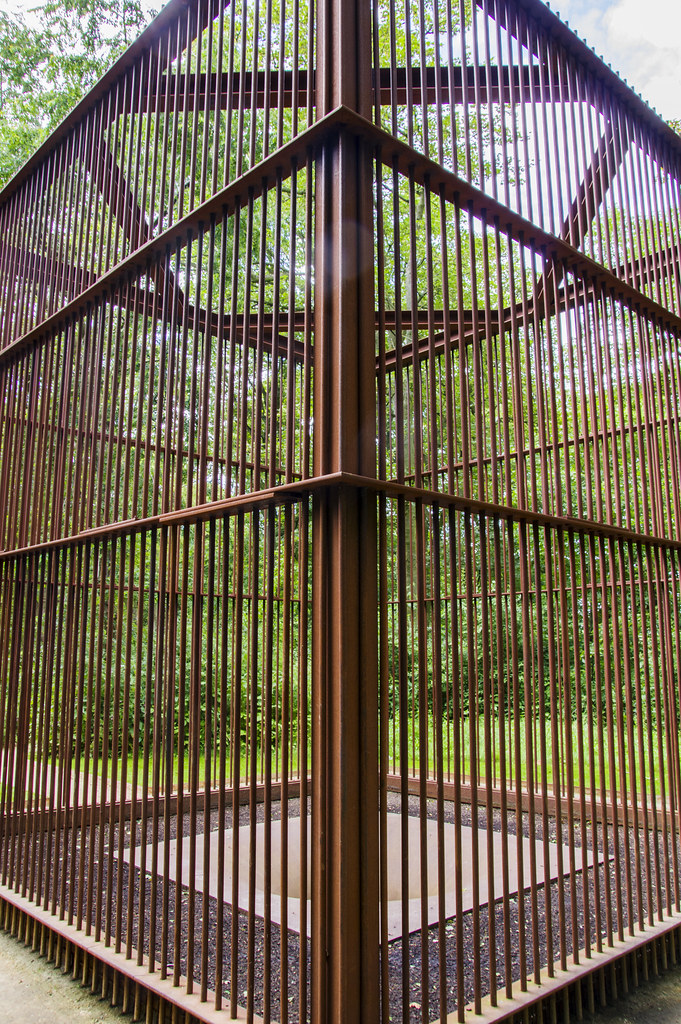
an adaptive impossibility?
This blog is called, 'Caught In Two Minds' because it is about displacement behaviour.  This is behaviour that arises when a person or an animal has two opposing or rival motivations competing at the same time.  This might be fight v flight or, approach v. withdraw.

Maybe I should have called this blog, Adaptive Impossibilities.  Why?  Because there are some environments that people and animals cannot adapt to.  In such cases, the organism finds it impossible to achieve certain psychological goal states, such as comfort or safety.  As a result, the brain compensates for the environment with maladaptive or coping strategies.  Hair pulling is one such mode of behaviour.

In nature, displacement behaviour is normal and short term.  For brief periods animals in the wild are confronted by situations that prompt competing behaviours or opposing motivations.  Displacement behaviour, such as grooming sequences, emerge briefly until the situation changes and an adaptive response to the environment can be expressed.  But in captive or artificial environments, which may be permanently static and inhospitable, displacement behaviours can become fixed and stereotypic.

In people, but especially children whose brains are forming and growing, an environment that does not offer safety, comfort or the fulfillment of other core goal states is problematic to them.  The child is troubled.  It cannot find an adaptive relationship to the world.  In short, it does not know what to do or how.  In these circumstances I believe hair pulling becomes highly likely.  Of course, the child may not know why s/he is pulling their hair.  This is because the environment to which it is experiencing adaptive problems may be the only one it has ever known and without a point of comparison it has no way of recognising the cause of the problem.  In this respect, therapists tend to focus on symptoms and not root causes.

Once the pattern of hair pulling is established, it can be very hard to lose.  In time many people simply grow out of it as they leave the initial environment behind or, the urge simply weakens.


Saturday, 25 July 2015

Toothcombing

hair pullers 'comb' strands using their front teeth
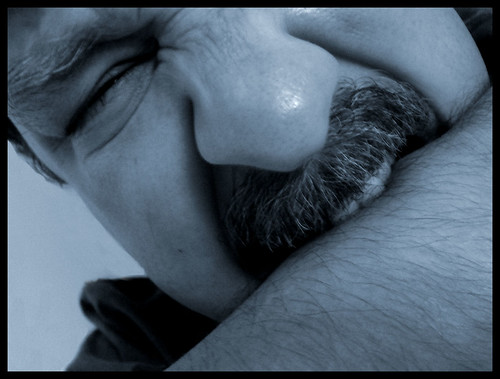
Animal behaviour can reveal a lot to us about our own!  My interest is in grooming behaviours because these are some of the most ancient behaviour patterns we possess and for this reason they tend to occur automatically, requiring very little (if any) conscious effort.  Whether it is scratching an itch, rubbing one's beard, running your hands through your hair...these actions are not so much ones that we do but ones that we are!

In animals too, grooming behaviours are the most natural and automatic of actions.  Recently, I was cycling along a country road and was fascinated to watch a mare with its young foal in a nearby field grooming each other.  They were taking each other's fur into their mouths and then using their teeth to comb the hairs through the teeth and in the process remove any dirt or entangled debris.

Other animals tooth comb too.  Primates do it.  And so do humans!  Now, you are probably wondering how can humans comb hair with their teeth.  Well, for people with hair pulling disorder (or trichotillomania) it is an integral part of the behaviour pattern.  They select and pluck out a hair.  This can be from the head, or elsewhere from the body and they aim to do this so that they remove the white lipid fat hair root which is attached to the hair stem.  They then bring this root to their lips and manipulate it by rubbing the moist root against the lips.  Finally, they use the gap between the front teeth to run the hair through and in so doing comb off the root and eat it.

Trichotillomania is a behaviour that connects us to behaviour patterns which relate to our lower brain - patterns that make us human and connect us to our primeval past!  It makes hair pulling a fascinating disorder by revealing remnants of the animal in us.

Monday, 22 June 2015

Social Captivity

sedentary living in temporary homes circa 1975, USA
It was the renowned psychoanalyst R.D. Laing who famously pronounced the condition of man to be one of captivity.  For him, the concept of captivity was bound up in notion of being-for-others.  In this sense, people were bound in relationships and where these were too rigid or where disturbed patterns of communication or where perceptions of others were skewed, the human image got distorted or lost.

For me, captivity as a concept applied to humans also reveals a historical problem.  Most of us on this planet live sedentary lives, which means we reside in one place or location. This means that we are forced to adapt to the situation in which we find ourselves, even if it is one we are less than happy with.  How many times do people say or think to themselves, 'If he wasn't my boss I would tell him to shove his job'?  Or, how often do people bite their tongues with their neighbours or colleagues?  They have to do this because they know that they must face those same people day in, day out for the long term.

In human history, when we lived nomadic lives, the stresses and strains of our environment were no less problematic but with one significant difference.  When groups felt oppressed or misgoverned by others they were free to go their own way, to separate off and walk a new course.  Sometimes this splitting off from the group was a reflection of group size and the need to remain in smaller bands so that living off the land did not become too pressurised by higher population density. 

Over time, as humans spread around the planet, the option for finding new pastures became less as population density increased and space to roam was no more.  As humans became more sedentary, class systems emerged whereby a new social order emerged to distribute the wealth from the land and society's labours.  The people at the top were fewer in number but proportionally attracted a greater share of wealth as they came to co-ordinate the work and lives of those under them.

This is the point at which politics emerges and having to live under a regime or order constructed by someone else.  This is my notion of captivity: being part of a social system not necessarily being operated with your interests in mind, and yet not being able to leave or move away.  Studies have shown that people living in societies where the gap between rich and poor is greatest suffer from greater stress and mortality rates are higher.  Is it any wonder that England with its rigid class structure produced waves of immigrants ready to settle new worlds and escape the oppressive social order at home?  The irony, of course, is that they re-established those orders elsewhere but raised their own relative positions within them by gaining access to greater resources than possible at home.

The problem of being stuck in a single situation that is causing stress and which one cannot simply walk away from is how to find ways of coping.  One way is to have an extended family so that aunts, uncles, grand-parents and cousins can all assist you if you have problems.  Alternatively, you may have a great network of trusty friends.  But many people do not and in this captive void may turn to self-directed behaviours to achieve a sense of comfort, relief and release.  Where these actions produce unwanted consequences, such as hair pulling, people may recognise the obvious symptoms and aim to treate these.  But the underlying socially related aspects must be acknowledged too.


Thursday, 14 May 2015

Something in the way...


 Smells Like Teen Spirit

Nirvana's Kurt Cobain once famously sung a song called Something In The Way.  Like a number of his tracks, it was a bit of a barbed response to his own fans with whom he had something of a love/hate relationship.  The song highlights a rather sad character who has no coherent perspective on life and is living a drop-out hippy kind of lifestyle.  

The notion of 'something in the way' could be applied to displacement behaviour too.  In my view psychology is a bit too concerned with intra-psychic events (Freud's legacy) and not enough with environmental obstacles which affect mental health.  Very often people grow up in situations where natural behaviours are obstructed or blocked from being expressed.  It is the continued frustration of species specific behaviours at key points of development which can lead to brain re-wiring and maladaptive patterns developing.

For example, a parental figure who elicits both approach and withdraw behaviours can place a child in two minds, blocking the opportunity for secure attachment and creating a state of mind that requires a behaviour, such as hair pulling, in order to attain some measure of ease and comfort.  Dysfunctional environments can be a real problem for young kids because they are at an age where they are trying to adapt, rather than challenge the physical limits of their world.  Trying to make oneself fit a 'cage' that is not conducive to development can lead to all kinds of mental and emotional problems.

In this blog I contend that where normal behaviours lack the environmental basis for support or expression, the human brain develops its own strategies for achieving internal goal states, such as safety and comfort.  The brain, being the amazing thing it is, may be successful in achieving the desired psychological effects it seeks but at the cost of producing distorted behaviour patterns. Viewed from outside the context in which they develop these can appear to make no sense whatsoever and offer no obvious benefits.  Hair pulling is one such case in point.

So, maybe Kurt Cobain's song could have included another verse or two to reveal that a whole range of distortions can occur when something does get in the way of people being more adapted to the world. From psychology's perspective, these behaviours need to be judged from within the situation people find themselves and not solely from the outside if they are to be properly understood.  In other words, instead of seeing these behaviours as merely problems, they should also be viewed in terms of the compensatory benefits they provide in reaction to a repressive environment.

Sunday, 22 February 2015

Research update

Focusing on qualitative and quantitative methods is an area of study that interests me for a few reasons.  It links to my interest in academic research and academic language generally, but also to generating new methods for examing self-directed behaviours.

From hair pulling, to chin rubbing, thumb sucking, self-harming, scratching or non-pathological self-grooming...all these are things of interest because they link us to our evolutionary past.

Moments of indecision, the weighing up of costs and benefits, calculating pros and cons...such mental processes usually produce self-directed behaviours.  They help us to to navigate our way through the dilemna (do I turn left or right?, buy X or buy Y?, etc.) by soothing the anxiety caused by being in two minds.

In social situations other outward signs of mental processes where two conflicting impulses are in conflict can be seen.  Football fans regularly brush their hands through their hair after a near miss of the goal by their team's striker.  It is a commonplace event that occurs during every game, but apparently no one can explain it, except by saying it helps relieve tension, eases discomfort and restores equilibrium.

What makes these kinds of behaviours even more fascinating to me is that we share them with other animals.  More significantly animals in captivity display more self-directed behaviours than in the wild and hair pulling ONLY occurs in captive animals!

Displacement behaviours have a clear purpose it would seem.  They help us to navigate our way through short-term periods of anxiety by soothing us and limiting excitement until the internal conflict caused by the immediate environment has been resolved internally or until the external situation changes and the dilemna is over.

But sometimes people (and animals) can remain in anxious states for long periods and at key points in child development this can lead to unwanted behaviours emerging.  Imagine being caught in two minds about something not just for a few seconds but for hours, days or even years!

My approach would be to undertake research into what the possible benefits of these behavours are.  Do they reduce stress or the heart rate?  Do they affect metabolic rate?  What happens if these behaviours are prevented in some way so the discomfort of being in two minds is not relieved?  These are the kinds of questions I would like to answer.  

But devising experiments that are simple and give clear results is not easy...as any psychologist would probably testify to.  So, studying the different methods and approaches to doing research is very useful and also widely applicable!


Sunday, 11 January 2015

Environmental factors in hair pulling behaviour

Some lab animals develop behaviours like fur biting

It is extremely hard to tease apart enviromental factors in the hope of ascertaining root causes of things. (In fact, so much so scientists do not even try!)  But one area that seems really helpful to explore in relation to hair pulling (and perhaps other self-directed behaviours) are ongoing stressors that cannot be avoided.

Where self-directed behaviour has emerged in some animal studies there have been environmental stressors identified which the organims cannot switch off to nor regulate.  A good example is where parrot in cages were hung the length of a room.  Those nearest to the doorway, through which people were coming and going most frequently, showed greatest signs of disturbance, as manifested in feather plucking behaviour.

As far as I know, the same understanding of such an environmental issue has not been applied to hair pulling.  Are there continuous stressors that the child can neither avoid, nor alter, nor control in any way?  Stressors might include personal space being consistently disrespected, incestuous advances or consistent rejection.  

The point is that a schism emerges between a person and their environment.  Sensory discomfort can only be countered by somehow negating sensory stimulation by attempting to switch off the environment in question.  If this state of affairs persists for a period of time during a sensitive developmental period, re-wiring can emerge with self-directed behaviours being manifested.

In addition to parrots, the same kind of effects have been found in mice where who were closely related genetically (i.e. parents, siblings) and housed together.  This produced a situation whereby the  sexual behaviour of mice could only be enacted in a context of incestuousness.  Fur biting soon followed.

I think people who do have hair pulling problems may benefit from considering closely those aspects of their formative environments that compromised them emotionally or sexually.

Thursday, 20 November 2014

Hair pulling (trichotillomania) IS a displacement behaviour

image by Steve Doria
Categorising hair pulling behaviour seems to be something that psychologists struggle with.
Of course, no one can make strong assertions without evidence. But from people who do pull out hair and have an 'inside take' on the problem, phenomenological information can be obtained.

From speaking to people who pull their hair out certain common feelings seem to be apparent.  A rise in anxiety prior to pulling, a relaxation following the extraction and an automatic sequence that is repeated which seems to restore some sort equilibrium until the anxiety passes.

This is exactly what displacement behaviours exist for of course.  In nature, animals demonstrate displacment behaviours when they are caught between
two behaviours, such as fight or flight.  The displacement behaviour lasts until the situation changes and the organism is no longer experiencing a conflict of mutually exclusive tensions.

In our household pets self-biting is common among dogs who are distressed.  This self-directed behaviour seems to offer a classic view of what displacement behaviour is.  Such a poor animal's distress might take the following course.

1.  a need to escape a threatening situation - but no escape is possible!

2.  instead of escaping, avoidance is attempted - but there is no away to
     avoid the stressor either.

With two key survival strategies frustrated the animal can find no control over its environment. Whatever it does, it cannot solve the problem and find comfort or safety.  The self-directed behaviour emerges as a final act by which the dog can exercise some control over its physiological state.  Self-biting is a means of disengaging from its environment (i.e.from the source of its stress) via an action which achieves some measure of equilibrium but by maladaptive means.

I believe that hair pulling in humans serves the same effect. The hair puller's environment is causing stress that the person cannot escape or avoid or findany solution to.  In young developing people where the brain is still wiring itself, such pressures can lead to lifelong hair pulling because the child is not psychologically strong enough  to cope with its situation.  Once the behaviour begins it becomes part of the intrinsic behaviour pattern of the individual concerned  and is hard to break - but not impossible if the conditions in which the child was embedded at the time the disorder developed can be uncovered and the original anxiety identified and worked through.

To say there is a cure is a bit of a misnomer.  Hair pulling can be stopped, but the original anxiety that led to its emergence is something that can never be taken away.  But it can be faced and coped with, so that the adult hair puller does not have to be a prisoner of the childhood environment in which hair pulling served as the self-comfort of last resort.