Thursday, 20 November 2014

Hair pulling (trichotillomania) IS a displacement behaviour

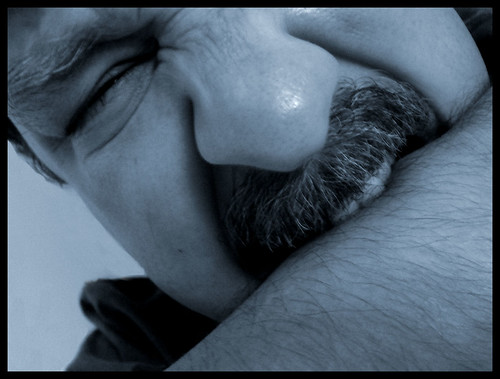
image by Steve Doria
Categorising hair pulling behaviour seems to be something that psychologists struggle with.
Of course, no one can make strong assertions without evidence. But from people who do pull out hair and have an 'inside take' on the problem, phenomenological information can be obtained.

From speaking to people who pull their hair out certain common feelings seem to be apparent.  A rise in anxiety prior to pulling, a relaxation following the extraction and an automatic sequence that is repeated which seems to restore some sort equilibrium until the anxiety passes.

This is exactly what displacement behaviours exist for of course.  In nature, animals demonstrate displacment behaviours when they are caught between
two behaviours, such as fight or flight.  The displacement behaviour lasts until the situation changes and the organism is no longer experiencing a conflict of mutually exclusive tensions.

In our household pets self-biting is common among dogs who are distressed.  This self-directed behaviour seems to offer a classic view of what displacement behaviour is.  Such a poor animal's distress might take the following course.

1.  a need to escape a threatening situation - but no escape is possible!

2.  instead of escaping, avoidance is attempted - but there is no away to
     avoid the stressor either.

With two key survival strategies frustrated the animal can find no control over its environment. Whatever it does, it cannot solve the problem and find comfort or safety.  The self-directed behaviour emerges as a final act by which the dog can exercise some control over its physiological state.  Self-biting is a means of disengaging from its environment (i.e.from the source of its stress) via an action which achieves some measure of equilibrium but by maladaptive means.

I believe that hair pulling in humans serves the same effect. The hair puller's environment is causing stress that the person cannot escape or avoid or findany solution to.  In young developing people where the brain is still wiring itself, such pressures can lead to lifelong hair pulling because the child is not psychologically strong enough  to cope with its situation.  Once the behaviour begins it becomes part of the intrinsic behaviour pattern of the individual concerned  and is hard to break - but not impossible if the conditions in which the child was embedded at the time the disorder developed can be uncovered and the original anxiety identified and worked through.

To say there is a cure is a bit of a misnomer.  Hair pulling can be stopped, but the original anxiety that led to its emergence is something that can never be taken away.  But it can be faced and coped with, so that the adult hair puller does not have to be a prisoner of the childhood environment in which hair pulling served as the self-comfort of last resort.



Monday, 10 November 2014

Instinct - Hollywood on the effects of captivity

Instinct poster.jpgThere are not many movies that try to tackle truly big themes, such as why is civilisation so brutal and make a clear link between civilisation and life in captivity.  In this blog the idea of captivity is prominent because certain behaviours in animals emerge in captivity that do not appear in animals living wild.  And, for me, behaviours like hair pulling can be traced to environmental deprivation in both animals and humans.  So, it was a big thrill to watch a Hollywood movie that tries looks at how environments can undermine species specific behaviours and how these environments can turn people crazy.  

Dr. Ethan Powell (Anthony Hopkins) has been arrested and returned to the USA after committing a murder in Rwanda, where he has been living amongst a group of gorillas, who have accepted him as part of their family. He returns and appears violent and refuses to speak until a psychiatrist, played by Cuba Gooding, Jr takes on his case as a way of furthering his own career.  He hopes to maybe write a book based on this curious case.

In the high security section of the jail where Powell is kept with other 'psychotic' patients, there is a lot of brutality from the prison guards who have their own ways of keeping the prisoners in line. Due to staff and funding shortages only one prisoner is allowed out each day into the exercise yard.  They randomly award each inmate a card from a standard playing deck and the one holding the ace of diamonds gets to see the sun and sky whilst the rest have to stay inside.  However, in reality the same person gets to go outside each day because he is able to bully the ace out of anyone weaker than him...until Powell arrives.  He fights to keep his ace and establishes a new pecking order, which arouses the dislike of the senior guard.

Meantime, the psychiatrist has started to win Powell's trust and got him to slowly open up.  We begin to understand why he killed someone.  He was living in peace with the gorillas and they had accepted him - not as one of their own (i.e. a gorilla) - but as a member of another species they accepted into their ranks.  This, as the film points out, is an amazing act.  Eventually, soldiers come to find Powell who has been reported as missing.  They open fire and kill all the adult gorillas believing them a threat.  Desperate to protect them Powell attacks them and kills one.

Understanding his patient better, Gooding's character tries to get him out of prison but further fights break out and it looks as though Powell will never be let out. Powell also makes him understand how we all live in captivity and how all our behaviours are distorted by this because we lack control over our environment.  Powell, profoundly explains how civilisation is a form of trap because we can never get outside of it and how it rewards destructive behaviours such as hoarding and profit seeking.  

Towards the end Powell is able to escape captivity with the assistance of Gooding and some of the other prisoners and returns to life outside society in the African jungle.  Meanwhile, Gooding realises that his career path is all wrong and that his striving to reach the top means he can never truly be free from the objectives that civilisation set for him, but which he does not choose for himself.

Although there is no stereotypical behaviour featured in the movie it aims to get to the heart of why people and animal behaviour can become distorted by an environment that is not one that the organism evolved within and is an adaptation to. Hopkins and Gooding are great and carry the film, which could so easily have failed with a lesser cast.  So, well worth a look by anyone interested in behaviour and in need of some entertainment.


Monday, 8 September 2014

Caught In Two Minds - happy birthday!

image by Graceful Cake Creations
It is one year since I started this weekly blog on self-directed behaviours and 52 posts later and 2500+ hits on I would like to thank those of you who have visited or followed the site.

From talking about hair pulling, to chin rubbing, animal behaviour in captivity, hunter gatherers and evolutionary psychology - it has been a lot of fun discussing and sharing these topics.

The aim is to carry on with the blog, though in the future posts will be every 2-4 weeks rather than every week.  This is because of time and energy constraints in part, and the fact that it gets ever harder to cover new angles.

The purpose behind this blog has been to keep my interest in self-directed and displacement behaviours alive whilst I aimed at doing more research in the future.  However,  problems with funding have blocked this ambition unfortunately.  But maybe one day more work on hair pulling and other behaviours can be undertaken.

Thanks for visiting and don't forget to check the back catalogue to read some interesting articles on self-directed behaviours.

Will S.

Wednesday, 3 September 2014

Hair pulling as indicator of emotional dislocation

a dislocated elbow...but what about emotional dislocation?
 To me hair pulling behaviour points to a dislocation between an internal impulse (physiological) and its physical expression (behavioural) so that the impulse is constantly repressed or negated.  This ongoing tension may be compared to a rocking to and from between two states.  For example, a child will feel the need to approach a parental adult for comfort seeking needs, yet if this parent is unreliable and provokes a withdraw response the child is caught between two stools, so to speak.  If this situation is ongoing and no alternative adult is available the child will develop coping or maladaptive behaviours and hair pulling fits this category.  This is because hair pulling is a displacement behaviour, in my view, which emerges when two opposing impulses such as approach and withdraw are simultaneously activated.  The pulling is the nervous system's way of deactivating this short circuit and finding some resolution to the ongoing tension.

Hair pulling reveals that there is something wrong with the hair puller's environment.  They are unable to settle or feel at ease.  They may feel constantly agitated and hair pulling is a form of relaxation.  For example, they may not want to be alone and yet find themselves alone, desire to find some form of relief but unable to do so.  So, hair pulling is a form of homeostasis whereby physiological tensions that cannot be mediated through normal social avenues (e.g. approach behaviour) can find some outlet.

I have no direct evidence for this in human studies unfortunately.  This is the kind of research  I would like to do.  But animal studies where fur, feather and hair pulling have been noted do back up the idea, particularly in artificial or captive environments where species specific needs are not supported.  This means the animal is striving to attain some internal goal state but cannot achieve it through interaction with its sterile laboratory environment.  For example, it may lack materials to build a suitable nest or place of safety and so its attempts at doing so are constantly frustrated and aborted.  Body directed behaviour follows, whereby the animal's normal behaviour is shown to have been utterly derailed and its environment utterly unsuitable to allow its behaviour patterns to develop normally.

This line of enquiry is harder to prove with people but there are some key signals I would look for.  I would predict that some who pulls hair will be in a state of agitation or feel unsettled to some extent whereby they should be able to report some anxiety towards their environment either before or after the hair pulling episode. 

Too much therapy is focuses on the puller and not enough on its environment - by which I mean the environment in which the hair pulling first emerged.  This is the situation, along with the developmental needs of the person at the time pulling first took place, that needs closest analysis.  Too often we treat the symptoms rather than try to find underlying factors. 

Wednesday, 27 August 2014

foraging behaviour and hair pulling?

Which one would you choose?
A basic survival behaviour since the dawn of human existence has been food seeking or foraging.  Humans have long had to make mental calculations about how much time and energy to devote to food seeking.  In those days it was calories rather than money that were the real currency.  If it took you all day to find food that provided only a meagre number of calories then you would not live very long before starvation would set in.  To survive one would have to find food that took less time and effort to find by seeking out a better alternative food - one requiring less time and energy to find and prepare before eating.

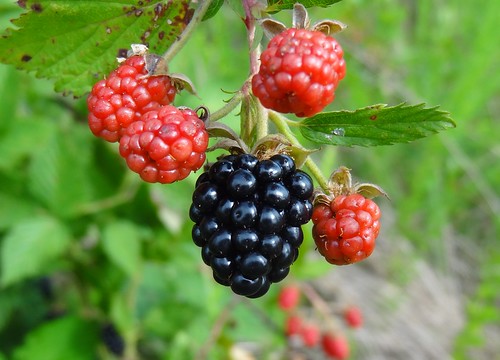
So food seeking, food finding and food selecting are behaviours key to who and what we are.  An obvious example is berry picking.  When picking berries one is automatically drawn to pick those which are largest and most ripe.  The choice is simple - the bigger and riper the berry means the more calories they possess.  Efficiency of effort is served by selecting these over smaller and less developed berries.

For anyone who has ever pulled hair to obtain hair roots some of these notes on berry picking should be familiar.  Hairs are selected from certain favoured parts of the scalp where the likelihood of extracting a fatty root is most high.  Commonly this is from the vertex or crown region.  As hairs in a favoured region become depleted the puller will start to pull from new areas.  This again makes sense in the context of food foraging because once one area becomes depleted of food the forager moves on to where berries are more plentiful and can therefore maintain a high rate of return in relation to energy expended. 

It would seem that the same mental algorithms that serve foraging may well serve hair pulling too, suggesting that trichotillomania is a behaviour that utilises key mental processes that normally serve to promote our survival.

For me, hair pulling is a behaviour that is ancient and which can be traced all the way back to the earliest medical records penned by Hippocrates.  It is a behaviour from which hair pullers derive great comfort and involves selecting the 'right' hair - one that will yield a satisfying texture and a healthy fatty root.  The final process of eating the root makes the comparison with food seeking (e.g. berry picking) natural to make.

By seeing a disorder as a distortion of normal behaviour rather than a behaviour that has no relevance or value within the normal repertoire allows us to recognise it as fundamentally human and comprehensible.

Monday, 18 August 2014

Darwinian psychiatry

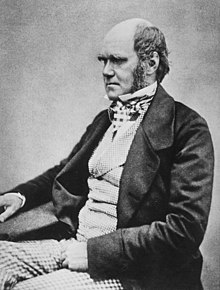
Charles Darwin - whose theory of evolution has influenced psychology
My approach to self-directed behaviours is largely influenced by Charles Darwin whose theory of evolution focuses on natural selection and sexual selection.  Natural selection relates to how well organisms are adapted to their environment in terms of being able to obtain food, fend off predators, develop immunity to diseases and grow to adulthood.  Sexual selection is how well organisms can attract mates and produce offspring.  The two things are separate but inter-related.

A darwinian approach to medicine aims to see whether strange behaviours or mental states have positive benefits.  For example, having a high temperature is the body's response to fighting off invading viruses - contrary to popular belief which sees the high temperature as caused by the virus. Invading micoorganisms cannot breed as quickly when the body is hotter.  Of course, the danger is that a temperature that goes too high can be life threatening also.  Or take vomiting - it is the body's way of ridding the gut of harmful contents and so has a beneficial function.

Similarly, Darwinian psychiatry aims at understanding the potential benefits of behaviours and mental states commonly viewed as harmful or a problem to be cured.  Let's take hair pulling for our example.  It can be viewed not as an adaptive action (one that promotes growth and well-being) but a maladaptive one.  A maladaptive behaviour is one that is manifested in an unnatural environment (e.g. a cage) and helps the organism cope better with its unnatural environment.  It may help lower stress levels but at the cost of hair or fur loss (i.e. bald patches) - but the point is that it is not all bad.

Viewing seemingly negative behaviours in this way stands the common wisdom on its head.  Rather than being behaviours that are bad for you and damaging, they instead may make you feel better whilst you are engaged in them.  Hair pullers positively enjoy yanking hairs and obtaining roots.  It is only the guilt and shame that follows brings them down.  

Another example is self-harming.  People may cut themselves or scratch at their skin and this is commonly seen as an act of self directed aggression.  But from a Darwinian viewpoint the self-infliction of pain may lead to dopamine release in the brain and from this the self-harmer can feel uplifted and elated.  This is not as contradictory as it may seem.  For thousands of years humans had to cope with injuries without anaesthetic, surgery or doctors.  The body developed mechanisms whereby pain at a certain level either leads to unconsciousness or can lead to endorphins (natural painkillers in the body) being released.  These endorphins are extremely powerful natural drugs and would have helped our ancestors keep moving despite their injuries.

Applying a Darwinian approach to psychology is long overdue and much needed if we are to make real sense of, and truly understand the reason we develop the behaviours we do.   

Wednesday, 13 August 2014

Regulating emotion via the body

my self-grooming cat
Self-directed behaviours are all about regulating what is going on inside us by manipulating our external physical body.  It happens when normal channels for handling our relationship to our environment are blocked, frustrated or unavailable. 

All animals - and this certainly includes humans too - learn to survive by interacting in a purposeful way with their surroundings.  Take an insect and put it in an empty glass jar and you can soon see how when taken out of its environment it has no way of using its innate abilities to serve its own needs.

People can live in glass jars too.  They can find themselves in sterile surroundings that offer them little or no chance to express themselves, obtain loving responses from others,  finding security or comfort and feeling the way they need to feel to be content in their own skins.

I have written about this topic before.  It is called homeostatis - the way an organism controls its internal state by interacting with its environment.  Animals demonstrate it very clearly.  For example, if not fed at the appointed hour my cat will yelp and cry.  If perhaps I am busy for some reason and it does not get the response it requires (i.e. to be fed) it will eventually quite meowing and start grooming itself e.g. licking its fur.  Unable to successfully manipulate its environment (me) through attachment evoking sounds and unable to stop the feeling of being hungry it is between something of a rock and a hard place.  It can only endure this state of tension for as long as it feels able to exercise some control over its personal destiny.  When its efforts at attracting attention go unheeded for a time the grooming behaviour offers a way of switching off or self-calming until either the situation changes and it is able to try again, or its hunger increases and prompts a renewed attempt to elicit the response it seeks (to be fed).

I should add, I love my cat and do not go out of my way to make it sing for its supper.  But its grooming behaviour is regular enough for this observation to be made.  Humans are similar too.  Observations of people playing with their hair whilst waiting or bored, rubbing their skin or scratching are signs of being in an inbetween state - of aiming to attain an internal state whilst in a environment over which control is limited so that manipulation of the situation in a desirable way is not immediately possible.

This sort of predicament is so common that one might say it reflects the human condition of being in the world.  What interests me is when this situation is prolonged unnaturally and what happens when it is. 

But don't worry, I won't be experimenting on the cat!