Tuesday, 5 August 2014

More on bad environments

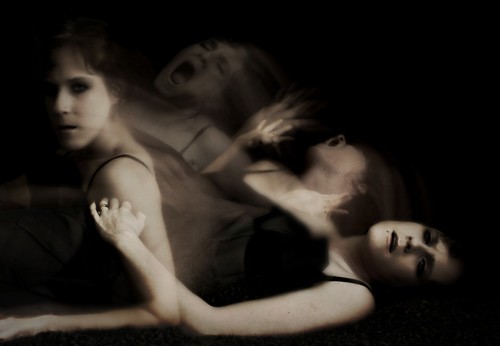
image by JustcallmeBethy
Sometimes environments fail to give a person what they are seeking. Most people adapt to these kinds of conditions if they arrive in them as adults because they already have had prior experience of their needs being met and they are able to manage their needs by seeking fulfillment elsewhere.  Younger persons can cope too with, for example, difficult home lives if they can find some form of sanctuary with relatives (aunts, uncles etc.) or with close friends.  But if the environment being relied upon is all a person has and it fails them the consequences can be terrible.

We have all met people who exude calmness and emotional balance - they are usually the people we would most like to resemble or the ones we envy secretly.  They are people who we wish to be close to so that we can share in the equanimity that they possess.  But in fact, it is not them one should envy necessarily but the system of relations of which they are part - i.e. their environment.

The problem of being brought up in a disturbing environment is that it prevents a person from directly experiencing themselves in relation to a loving other.  There is no response that can be relied upon to allow a confident self-image to be based upon.  Lines of communication may be twisted and direct communication that is open and honest seem impossible without fear of misunderstanding or arousing an unwanted reaction.

Mental problems such as paranoia can develop in such situations, where one may feel of no importance and feel jealousy towards those who are held to be more significant or loved.  In some cases protective delusions are built up to allow a person to feel important.  In schizophrenics the environment may be so distorted they lose any sense of who they are, who others are and what situation they are in.

In incestuous situations the child may experience a real conflict between keeping a symbolic relationship with the parent alive and keeping their own individuality intact.  Confusion stems from the parent relating to the child in two ways - as parent and lover.  Incestuous feelings can be aroused too where a child is not allowed adequate privacy, is smothered and is treated as a 'darling' rather than a son or daughter.

My main interest is in self-directed behaviours.  An environment that does not recognise or respond to the needs of a person risks producing these because the individual will continually be seeking a certain relationship to its world (to be heard, recognised, comforted etc) but be continually knocked back or frustrated.  This continual process can, in young developing children (and animals in captivity), produce behaviours such as hair pulling which reveal that the body has become a source of satisfaction in order to deactivate the behaviours that can find no outlet.

One of the reasons that hair pulling may be so little reported is because for the people who do it it is a very comforting and helpful way of mediating their emotional frustrations.  In short, they feel better doing even if there are the unwanted consequences of bald patches and social embarrassment.

Monday, 28 July 2014

Thumb sucking

image by Megabu7
Thumb sucking is a self-directed behaviour that for the most part is viewed as perfectly normal and natural within a certain age range.  It is usually performed by children after weaning - and its emergence suggests that the weaning process has occurred too quickly and ended before the child was ready.  Thumb sucking reveals that the mother's body was once the child's living environment and that its (the child's) physical functions remain rooted in the mother.  

Persistence of thumb sucking beyond early childhood suggests the child has not been able transfer comfort seeking to an age appropriate behaviour.  Freud referred to such regressive tendencies as fixations and this related to his idea that there were stages of development or specific phases and sometimes children could get stuck at a certain stage.  The notion of stages is not so adhered to these days - normatively children will go through behaviours at certain points but there is nothing arbitrary or inevitable about the mode of expression that will be manifested.  

Having a physical function rooted in the mother's body implies separation has not been managed in the interest of the child but probably been imposed arbitrarily on the child by the parent who has decided that it is TIME for the next stage of growing up to be reached.  It is important that we get away from the idea of fixed stages in order to prevent the kind of thinking imposes change for no good reason.  I believe that if a child is allowed the freedom to behave in accordance with his wishes and needs then in time s/he will move on in his/her development soon enough.

Ultimately, thumb sucking is a healthy thing because it shows that oral behaviours have developed,  and that the child has attained an important level of physical functioning.  The child whose oral development is disturbed might never suck his thumb - nor dervive comfort from other things such as blankets or soft toys.   But more on these comfort behaviours in another post. 


Sunday, 20 July 2014

Why write about self-directed behaviours?

Whenever people learn about my blog they ask me, 'why?'  It is a fair question.  I got interested in self-directed behaviour whilst studying psychology courses at Helsinki University.  It started out as an interest in attachment theory (e.g John Bowly, Mary Ainsworth) and then extended into evolutionary psychology (e.g.Cosmides and Tooby).  Afterwards I became interested in ethology (studying animal behaviour - particularly primates) and what studying animals could reveal about human interactions.  From that I developed an interest in how animals respond to captivity and from there the parallels with human self-directed behaviours became evident.  

My PhD studies are on hold right now, so this blog is partly a means to preserving my interest and also a public record of my work.  

Writing about this stuff is very satisfying.  It is a minority interest of course, and not one that will ever appeal to most internet surfers but that is part of why I like it.  

There is a political aspect to this blog too.  As humans we are constantly having to adjust to rapid changes in the social world around us.  But humans are not limitlessly plastic (flexible) and nor are we blank slates who can put up with anything and everything - as animals raised in barren conditions of captivity frequently reveal.  Unfortunately, politicians and corporations often overlook this fact as they seek to promote their interests over the social well-being of others and ignorant of knowledge of human history and evolution base decisions upon ideologies serving short-term profits.  Where humans are embedded in environments that do not properly respect those conditions characterising our evolutionary history  problems will emerge.  And by this I mean self-directed behaviours. 

Humans need to feel rooted in their environments; they need social support; they need to feel they have control over their lives to the extent that they can remain cognitively flexible and avoid psychological inertia. They have a strong sense of what is just, moral and fair and react strongly when these principles are not respected.  They can accept inequality just as long as they have the same opportunity as another person to make something of themselves so that any status difference is the product of hard work rather than social privilege or cheating.  Ultimately, we are creatures of light, I believe, rather than ones of darkness for who would choose the latter over the former if given a free choice.  In the absence of choices people find alternative ways of coping - sometimes body-directed ones - as a way of regaining control over their hostile environments.  Ultimately, we and our environments are one and anything that seeks to place human beings in glass jars or social vacuums will create destructiveness that is aimed inwards (body-directed) or outwards (hurt to others).

So, this site may only be of minority interest but the studying self-directed behaviours touches on universal concerns: how to live and stay mentally healthy in a social environment that can be frustrating and seemingly opposed to human needs.  In writing this blog I get to connect to those concerns that make me (and you) a human being and in this respect it is a worthwhile exercise.

Monday, 14 July 2014

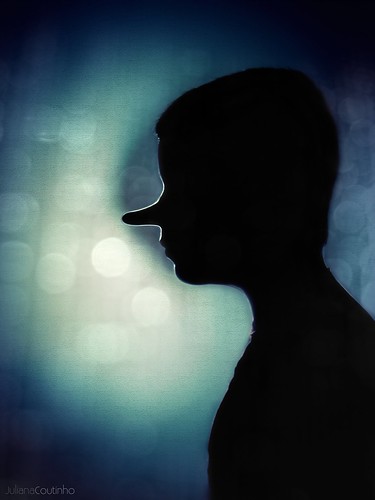
True or false? self-directed behaviours that give away liars!

image by J. Coutinho
Lying is not easy......there are conflicting emotions involved - fear, guilt and shame - which need to be controlled or the lie will become apparent.  But the conflict also reveals that we value honesty and truth because they usually bring peace of mind and to contradict this creates anxiety.   Self-directed behaviours often emerge unconsciously when we tell a lie and in some cases they may be viewed as displacement behaviours because they reveal that the teller is in two minds about the lie he is telling.  Here are some possible examples:

1. The 'Self-Squeeze' - this is when a person holds or hug themselves tightly.  This may look as if they are giving themselves a group hug or may also involve clamping their hands between or underneath their legs.  The self-squeeze is a way of steadying the body or keeping the body locked into a pose so that it cannot interfere with lie in progress.  In this respect, the person may appear as if frozen into an ice statue pose or be like a rabbit hypnotised by headlights.

2. Eye contact avoidance indicates is a common when lying.  In this blog we have discussed displacement avoidance and lying may generate the same phenomenon. There is also some evidence that looking up and to the right is also a sign of lying because in this action the brain is seeking to access that part of itself that stores imaginative data, rather than real memories or facts.  Indeed, it is well know that the act of thinking and imagining is a private one and to do so on the spot in front of people involves an attempt at protecting one's personal space from others.

3. Touching nose - aka 'the Pinocchio Effect'-   is when the person finds it necessary to lay a finger aside their nose, making it appear they have a longer nose than normal, hence the term 'Pinocchio'.

4. Covering the face/mouth reveals an amateur liar at work because they are attempting to 'obfuscate by muffling', (the O.B.M. Effect).

5. Lipbiting, which may accompany a face pull or a grimace is a self-directed action that gives liars away.

It would be interesting to do some research into these behaviours and see whether the do qualify as displacement actions or not.

Sunday, 6 July 2014

Interview with a female hair puller

image by zsoolt
Some time ago I interviewed people as part of my PhD and I was very lucky to talk to a young woman whose story and insights are revealing for anyone who has had hair pulling disorder.  Here is the interview...

"I can't remember the first time [I pulled my hair] specifically.  However, I do remember the first few months of the behaviour. Most of the time I was in bed or on a couch, just sitting there and pulling the hair out of my head. When I was five I began skin picking on my head specifically...nothing that I can recall really triggered the beginning of it, I guess I was just an anxious little girl. It was definitely calming for me though, that's the main feeling I recall. 

Pulling was first directed towards my head, then later on towards pubic hair but still mostly my head hair. Then the behaviour went away for the most part and now I will occasionally pull eyebrow hair but not nearly to the extent I used to."

The interviewee was asked to consider a range of possible environmental factors that may have contributed to her hair pulling, with the emphasis on feeling trapped, isolated or confined.  Here is what she said:

"I was abused by someone a little older than me who used to ride his bike around our neighborhood, and because I was afraid of him I spent the majority of my childhood hiding inside, even after he moved away. Therefore, I did feel confined. I also felt abandoned by my parents, specifically by my mother, because the first time my abuser babysat me, I told them I didn't want him over because I was scared of him and they left anyway. Sadly, the clearest picture I remember during that part of my life is looking out the window and seeing them drive away." 

What other factors might have contributed to the hair pulling?

 "As far as environmental factors, when I was 11 my mother bought me a large, lighted magnifying mirror for my skin or something. This is when I would lock myself in my bathroom for hours picking at my face. For hair pulling, I can't really think of any but I know my maternal grandmother also had the disorder at one point. Also, when my hair pulling really began, a few months prior I had disclosed the sexual abuse I had suffered three years prior, so anxiety most likely played a big role in that.

 My mother was also a factor. Her emotions were very unpredictable and she was really mean and nasty a lot of the time. Because of this, I have a lack of an attachment to her. I think a lot of her issues with me had to do with viewing me as an extension of herself. She would call me names, lie, demean me and pretty much ravaged my self esteem. I have noticed that since moving out of my house, besides my nail biting all of my repetitive behaviors like self-cutting and hair pulling stopped cold. I felt my world was completely out of my control living with my mother - I was constantly attacked and I didn't know when the next rage would happen. Because of this, I felt under her constant control. She grounded me constantly, wouldn't let me see friends, wouldn't let me journal (she would find it and then rage at me for the things I wrote), would pull me out of therapy, etc. Basically she cut off any support I could have had...I felt a lack of personal space because of things like my journalling. I distinctly remember her "cleaning" my room but she was really going through all of my stuff and I felt incredibly violated, even as a child. A nanny recalled that my mother described me as "adult like" when I was 3 because I would just sit quietly at the table during meals. Most 3 year olds I've come across are more emotional and excited than quiet."

I asked how the hair pulling behaviour was currently manifesting itself:

"Now, I no longer pull and haven't for seven years I believe. When it first stopped, I had begun habitually self-injuring and I think that took over my need to pull. I had self-injured a little bit prior to the onset of the hair-pulling but not in the addictive phase. Then when the more addictive phase began I stopped. I self-injured off and on until about a year ago and I haven't since, and the pulling has not returned. I have been biting my nails since age 4 or 5 and still do, unfortunately. My skin picking was at its worst when I was 11 years old and has tapered off significantly."

 
Some really interesting themes emerge from this interview.  One is being in a symbiotic relationship with the mother or where the child may feel s/he has no way of regulating their internal emotional state via interaction with the parent.  Hair pulling may emerge where the child may feel thwarted in attempts at attaining comfort or safety and self-grooming emerges out of the ongoing frustration.  Another theme is the way hair pulling may diverge into other modes of behaviour over time - or find expression via different trajectories.

My thanks to the interviewee for her kind permission in sharing this interview.  I hope readers out there have also found these comments useful.

Monday, 30 June 2014

Interview with a hair puller

I was lucky to interview someone recently who developed hair pulling behaviour as a child and they told me about the first time they pulled out a hair and examined the lipid fat root.  Here is what they said:

"It is weird that I can remember the first time I ever pulled out a hair, but I can.  I remember sitting watching TV,  I must have been about 9 years old.  I had just had a bath and was sitting wrapped in a towel.  My mother and father were also in the room.  Not sure what was on TV but I remember some urge possessed me to pull a hair.  It happened automatically.  It was like some force was driving me to do it.  The body just had a will of its own to do it and once plucked I was surprised to see the glistening white root fatty root.  I plucked a second hair just to see if I could repeat the same result as I had the first.  And I did.  And I just kept on plucking after that.

My family must have seen me do it and I recall my dad told me to stop it on a few occasions, but they never took me to a doctor.  I suppose they viewed it as a bad habit that I would grow out of.  But I wish they had understood the nature of trichotillomania - that it is a real condition and not a passing phase.

The more I plucked the more other changes occurred.  As a child I had very fine, glossy and straight hair but when the plucked hair grew back it grew back thicker, curlier and more dull in colour. 

I plucked consistently until I was into my mid-teens and developed very thin hair on the crown of my head.  To avoid over plucking in a single area I would pluck from alternative places - the sides of my scalp.  Again, thinning occurred.  Over time my hair pulling developed into skin picking as I tried to find alternative ways to avoid direct hair pulling without giving up on the comfort I got from this behaviour. 

To this day I will still dig my nails into my scalp and eat the skin I can scratch off.  It doesn't happen often but I know that the same impulse that affected my as a kid still affects me today. "

These interesting insights reveals the strange trajectory that hair pulling can go in, with manifestation of hair pulling behaviour changing over time.  It also reveals how this condition is very hard to cure outright.  Genetic changes, such as hair quality altering, are also a part of trichotillomania, with changes in hair quality a common phenomenon.  I wish to thank my interviewee.  I hope you found it interesting too.

Monday, 23 June 2014

Human 'captivity' may precipitate hair pulling?

Self-directed behaviours affect animals raised in captivitiy - fur biting, hair pulling, feather plucking...so it is fair to say that environmental disruption is a strong link with these behaviours.  So, can self-directed behaviours in humans also be traced similarly?  The psychoanalyst R.D. Laing famously pronounced that man is a captive animal - which I take to mean that his social boundaries are ones imposed by modern society but are not ones that characterize humanity's evolutionary history.  

When environments go wrong it means that some essential behaviour is being frustrated or unsupported.  For example, the conditions for rest and relaxation require a level of comfort and sense of safety from danger.  But what if drowsiness arouses fear of attack or the loss of control over the proximity of others?  Where the need to maintain wariness and the need to achieve sleep are in prolonged conflict it could mean that the onset of drowsiness could become a trigger for displacement behaviours.  These might serve to resist the transition to unconsciousness until a window of opportunity - where risk to safety is tolerable - arrives.

There are many ways too that people can feel 'caged' by their environment.  Maybe they are being brought up in a home where parents are enforcing certain rules or boundaries too strongly.  Or maybe one of the following situations has arisen:  judging a child by adult standards of behaviour; limiting physical movement; restricting vocal expression; disapproval of touching and grooming behaviour; preventing free playfulness; imposing social separation and isolation for prolonged periods; creating power imbalances; affording limited or unsuitable living space.  With all of these situations there lies the risk that, as with caged laboratory animals, the species specific conditions that behaviours rely upon to get their cue or derive their setting point are undermined. The organism may retain the propensity towards a particular action or state, but  the environment continually fails to allow its expression.  This creates a stop-start-stop-start experience which eventually becomes resolved through a third behaviour which deactivates this whole uncomfortable process but produces a new and unwanted chain of events.

Many parents fail to perceive or understand their offspring as children - but impose the same conditions that were imposed on them.  Any parent who demonstrates behaviours such as nail biting, hair pulling or self-directed symptoms is, in my view, revealing signs of being poorly embedded in their social environment.  The danger here is that if the parent is poorly adjusted the child may be even more extremely affected because the parent IS the child's environment!  In the most extreme of cases, the parent creates a barren cage for its offspring.