Sunday, 19 January 2014

What drama can teach psychology

I have always found it strange that the education system separates arts and sciences so rigidly when there is so much that one can give to the other.  If science is about learning how mechanisms operate, then the arts is about how to employ those mechanisms to create particular effects.
   One area (among others) where the arts have a lot to offer social science is the world of theatre.  Drama creates situations where people must work closely together within a limited and controlled space to communicate human interactions and intensity of emotion. It means actors are in a unique position to experience reactions and feelings that highlight the presence of mechanisms of behaviour that go unnoticed or unrecognised in everyday life.
   I am interested in how modern social situations can produce problematic responses in people because humans are evolved adaptations to a hunter gatherer lifestyle.  Our ancestors would have lived in small tribal bands where everyone knew each other and would have been in constant social contact.  But in modern life we are surrounded by strangers.  A person approaching you as you walk along the street may provoke a whole mixture of sensations - fear, recognition, desire to greet, desire to avoid etc.  These are all sensations that actors explore in the course of rehearsing and performing.
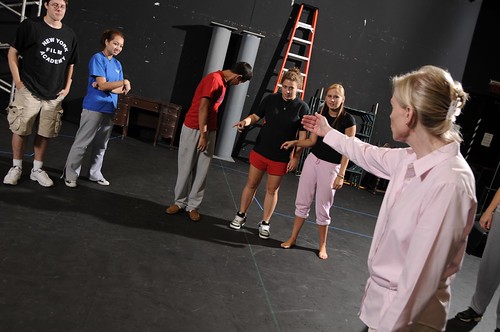
   In the world of acting it is a well known fact that approaching someone produces sensations or even impulses that the actor must learn to use and control on stage.  The closer one actor moves towards another actor the greater is their involvement as the visual reference to the surrounding environment decreases.  In other words, the other person dominates the visual field and attention becomes focused on them and not the wider picture.  Certain feelings come into play now, depending on whether the other person is friend, foe or stranger - love, anger, fear etc.  So it appears that humans have evolved to experience strong physical reactions at crucial points of distance.
    According to Clive Barker's Theatre Games, crucial distances are at 11 meters, 4.5 meters and 1.8 meters respectively.  At each distance point there is a transition that moves through certain stages and which the actor experiences as critical moments of decision.  Barker notes that at each transition point the "body re-coordinates slightly and this causes breaks and changes in rhythm, faltering steps and often a missed beat in the rhythm of walking."  In his own case Barker says he experiences, "sudden tensions and relaxations between the shoulder blades" as he crosses each of the three transition points.  Two  points to add here are that (1) eye contact must be maintained during the approach and (2) these sensations are only experienced if the approaching person blocks out the surrounding visual field - but they are not experienced if 180 degree vision (or a balance between the world and the other) is maintained.
   Barker calls these transition points degrees of involvement and the closer we come towards another person the greater our involvement or expectation of involvement becomes.  This means the body and mind must prepare itself for action and engagement - whether that be fight or flight, acknowledge or ignore etc.
   In a separate activity Barker asked his acting students to approach a partner but to do so quickly and if they felt their safety threatened to move to the right.  He found that most of his students broke to the right at a distance of 4.5 meters (5 yards) from the partner.  There was also some resistance at 11 meters (12 yards) too, but this was easily overcome.  This activity reveals there is a distance at which hostility and fear of violence begins and it is just before the regular distance of social interaction (1.8 meters or 2 yards) is entered.  
   Knowing about these distances is important for actors who must work in close proximity to others, often on tiny stages, but at the same time seek detachment, e.g. Othello.   But knowing about these distances is equally important for a psychologist, and especially in relation to displacement behaviour.  If we know there is a transition point at which flight versus fight behaviour can become most activated, then we can limit a person's natural response and see what other behaviour emerges when we do this.  Film directors do this all time to their audiences - a horror film puts us in a situation of imagined danger but does not give us a way out and forces us to go through transition points we might otherwise not choose to experience.  Self-directed behaviour, such as nail biting or displacement gaze averting may occur where an audience member is neither able to entirely avoid the scary action on screen nor confront it bravely either.
   For me this sort of information is crucial.  In family life and social life there are many situations where people are living in close proximity with each other.  This inevitably means that transition points will be felt. I believe that self-directed behaviours may emerge when close confined proximity produces sensations that cannot be expressed or acted upon and must be repressed or where impulses produce conflict with one another.  This is an area that I would love to research - it would seem the arts knows certain things that the social sciences need to catch up with!

Reference:
Barker, Clive (1977) Theatre Games (Eyre Methuen London) pp.123-4

Friday, 10 January 2014

Unnatural environments

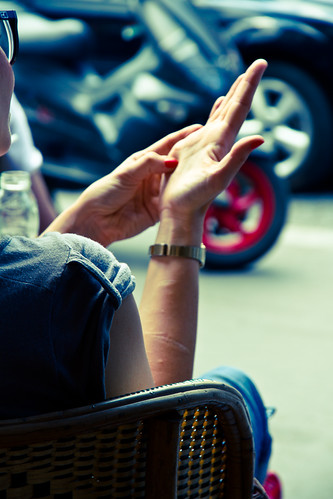
photo by Dave Adams

Evolution tells us that all life is in competition to be the best adapted to its environment in order to obtain the most resources and leave behind offspring. In this respect we can say that all life is programmed to function to these ends (physical growth and reproduction) under normal conditions. But conditions can change and are not always optimal for survival – just think of the dinosaurs!

I am interested in what happens when conditions are unnatural.  In other words, what happens when you take an organism that has evolved to thrive under certain conditions and place it in ones that it has not evolved to cope with.

One scientist who did just this with monkeys was Harry Harlow.  He took these highly social animals as infants and placed them in prolonged states of isolation and other forms of sensory deprivation.  The aim of the experiments were to see what would happen and whether any negative behaviours could be rectified once the  monkeys were returned to normal environmental conditions (i.e. back with their social group).

The effects of Harlow’s experiments were most disturbing.  Keeping young, developing animals in conditions that they were not genetically programmed to cope with led to a lot of self-directed behaviours such as prolonged self-rocking, self-biting, hair pulling and eye poking.  When returned to their peer group they were developmentally behind and found it impossible to re-integrate themselves.  Later, impregnated females who produced offspring displayed little or no interest in their young, whereas males did not manifest mounting behaviours towards fertile females.   In short, the early unnatural environment had led to the inhibition of genetic expression.  Brain rewiring in an attempt to cope with being placed in such an unnatural situation was also evident.

One of the things that makes me interested in self-directed behaviour is because it tells us that something is wrong with the environment of the person who displays them.  We know that someone who sucks their thumb has been weaned too quickly or been forced to separate from the mother before they have had the chance to emerge fully from behaviours directed towards the mother’s body. But  I believe environments that directly contradict genetic programming are particularly damaging – such as placing a social animal in isolation!

The point is that the body and all behaviour requires a supportive environment if it is to fully develop.  No animal lives in a vacuum; a species is what it is because it is a response to a particular environment that it has taken millions of years to become successfully adapted to.  For a social animal, its environment is other members of its species too.  Take these away and the animal loses its raison d’etre.  Eye poking suggests to me that without a proper environment from which the body part in question can derive and fulfil its functions, it is experienced as something superfluous, bothersome and even aggravating.  Imagine having a limb attached to your body that you do not know how to use and which you feel has no purpose.  Wouldn’t you resent it and attack it too? 

I think that when an environment is damaged then an organism must be damaged too because it cannot grow and realise itself fully.  This means that certain types of behaviours just can’t happen.  You cannot develop speech without someone talking to you.  You cannot develop a healthy self-image without someone who experiences pleasure in how you appear and behave.  The (nurturing) Other is your natural environment!

For me hair pulling suggests that something must be wrong too.  A child left alone too much, with no one to relieve feelings of loneliness is forced to compensate in some way to ward off a sense of abandonment that brings stress that s/he has no adaptive way of dealing with, i.e. by approaching a carer and seeking physical contact. Hair pulling may be an effective strategy for obtaining relief from an environment that is permanently deprived because it promotes tactile engagement and oral comfort from combing off the hair roots.

 A person denied any way of developing a healthy self-image may well cut or hurt themselves as an act of repudiation of those aspects of themselves for which there is no apparent function.   As a by-product self cutting or self-hitting may promote the release of hormones or opioids that would otherwise be released through regular social mechanisms. Ultimately, an environment that points an organism away from itself, or makes an organism seek flight from others, or doesn't allow goal states of safety, or comfort to be attained will inevitably produce undesirable behaviours.


In my last post I asked people to get in touch who had experienced hair pulling.  To find out about the kinds of environmental factors that produce this kind of behaviour is something I would like to do.

Thursday, 2 January 2014

Appeal for hair pullers to get in touch

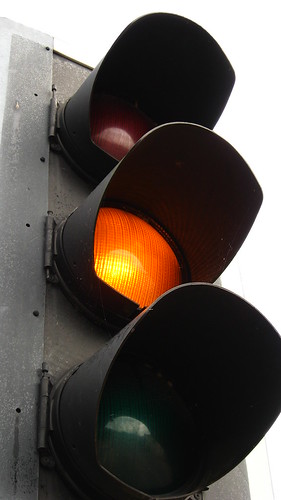
hair pulling - a permanent sense of being caught between green & amber?
This post is to appeal for people who pull hair to get in touch and tell me their story.

I believe that hair pulling (trichotillomania) is a repetitive behaviour that indicates conflict (e.g. between 2 opposing impulses - a bit like the stop vs. go feeling when traffic lights suddenly change) or frustration (when you are motivated to do something but prevented in some way).  Conflict or frustration when prolonged in animals can lead to odd (sometimes body-directed) behaviours emerging and I think the same may be true in humans.

My aim is to try and create a collection of case studies on the situations and circumstances in which hair pulling behaviour arises to see if any patterns or common themes emerge. But I would expect some of the following:

1. Lack of control over the social/family environment, with inconsistency in familial interactions which may reflect the absence of a clear social structure.
2. Symbiotic relationships to parents/caregivers.  This may include hazy and unclear boundaries relating to personal space or property (territory).
3. Sense of being captive or imprisoned or restricted. This may include an inability to attach or communicate with a parent; a problem of bringing peers into the home environment; an inability to confide in others.  A feeling of being cut off from one's peer group or socially isolated and a prolonged state of loneliness may be felt.
4. An incestuous or an inverted parent-child relationship in which the child is in a constant state of high stress around its supposed caregivers.
5. Where alternative forms of self-comfort have been denied or thwarted e.g. children who eat for comfort may be placed on a diet and turn to hair pulling as an alternative coping strategy.

(Note: Where a child has been brought up within a conflict or high stress situation, brain wiring will be affected early on to the point that a child may not even be conscious of the cause of its distress because it cannot detach itself from being embedded within the situation.)

In all of the above, conflict and frustration are involved at some level.  For example, a child motivated to approach a caregiver may also experience the simultaneous need to withdraw if the carer is threatening or a source of stress. Hair pulling may emerge as a way of using a body directed action to compensate for an environment that fails to meet a person's needs.  The kinds of things I am interested in learning are:

a. age hair pulling started
b. recollection of when/where/situation it first happened
c. how you felt when the first hair was pulled
d. a description of the pulling sequence e.g. pluck hair, examine root, raise to lips etc.
e. why you feel you pull your hair e.g. conflict with a parent/ isolation/ a need for stimulation
f. what benefit you get from doing it

Any data from the information I receive will be used in such a way that you will not be identified from it.  To leave a public message simply click on the heading of this post (Appeal for hair pullers to get in touch) and you can leave a message in the box that will appear beneath this post. To send a private message that only I will see, you can email caughtintwominds@gmail.com .

So far this blog has been read by people all over the world (US, Russia, Europe, South America, South East Asia) so I can only assume there are a lot of people out there who have an interest in hair pulling and why it happens and who may have a story to tell. 
Thanks to everyone who checked out this site out in 2013 and hope you will carry on visiting in 2014 - Will.

Sunday, 29 December 2013

Role of opioid system in self-directed behaviours?

No one knows explicitly why people pull out their hair (stereotypy) or perform acts that cause self injury, such as self-cutting (Self injurious behaviour/SIB) .  But from reports by patients, these self-directed behaviours make them feel better than if they didn't engage in these actions.  In other words, these actions are possibly a form of coping behaviour - though the mechanisms involved and causes too may vary.
   Research into the risk factors for developing self-directed behaviours found that Rhesus monkeys who were reared in isolation had a much higher chance of self-biting.  It led researchers towards a developmental neuro-chemical hypothesis in which self injuring arises from adverse life events (such as environmental deprivations) and is maintained by dysregulations of several neurochemical and physiological systems - and serves to reduce anxiety. (Tiefenbacher et al. 2005)
    Evidence in support that self-directed behaviours help in reducing stress and anxiety comes from studies using monkeys.  Monkeys with a history of self-inflicted wounding had a higher stress (or cortisol) response to the mild stress of blood sampling.  Self-biting was also preferentially directed to body sites associated with acupuncuture analgesia (sites of the body that acupuncture is applied to to reduce pain).  These correlations point to the possibility that self-injuring or self-infliction of pain may help mediate or reduce anxiety.  Whether this is a cause of the action or a consequence of SIB is unclear.
    In both hair pulling and self injuring subjects report relief directly after the self-directed action, e.g self-cutting.  In monkeys, a rise in heart-rate has been found to precede the SIB, followed by an immediate return to baseline after the episode. (Novak, 2003) It is this cycle of heightened internal tension, self-directed behaviour and immediate relief that hair pullers report sustains the process of hair extraction.  Many researchers believe the opioid system is implicated in this process.
    Self-stimulation of opioids (the body's own natural painkillers) could be key to why self injuring occurs.  In fact, after treatment with naltrexone (an opioid receptor antagonist) which reduces opioid levels, the chances of self-injuring behaviour can increase because individuals need to stimulate opioid release which may decrease any rise in tension or anxiety.
    One outcome from all this is that to investigate self-directed behaviours further researchers need to focus on the benefits of these actions.  Could it be the case that people who pull hair or who self harm have lower baseline opioid levels than others?  If so, maybe their harming behaviour is a way of coping by stimulating opioid release to address a heightened level of stress and anxiety caused by a non-optimal environment?
    The opioid system is not the only one that has been implicated with self-directed behaviour.  The serotonergic system may play a role too.  But it would seem the opioid correlation is a strong lead for future research.

References:
Stereotypic Animal Behaviour: Fundamentals and Applications To Welfare 2nd Edition (1996) edited by G. Mason and J. Rushen (CABI)  [see pp.176-180]

Friday, 20 December 2013

Hair pulling and D.W. Winnicott's theory of transitional behaviour

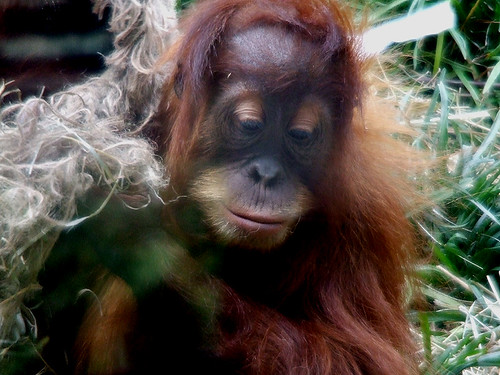
photo by Annie Chartrand

British psychoanalyst D.W. Winnicott was an amazingly close observer of child behaviour.  His is the only voice in psychology I know that has ever made mention of the way babies self-comfort using hair like fibres.  In Playing and Reality (1971) Winnicott describes how babies may pluck wool strands from a blanket and use them to caress the mouth area and sometimes even swallow the strands too.

Winnicott called this transitional behaviour - when an object is needed to soothe anxiety at a time when a transition from one state to another (such as from waking to sleeping) is occurring.  At such a time the baby may feel lonely or depressed and a specific object or behaviour helps offset this.  On this basis thumb sucking may also included too as a way of helping a child cope with the transition of having the mother present to her disappearance from view.

It is odd to me that Winnicott's observation has not really been fully followed up and related to hair pulling in later childhood.  The idea that this behaviour may link to how babies self-comfort could imply hair pulling is an innate behavioural pattern of the human species, or at very least a throwback to a behaviour learned in the early months of life.

For Winnicott, a baby's adoption of a bit of wool from a blanket or other material is a pattern (think of Linus in Charlie Brown) which can persist into late childhood or even adult life and is part of normal development.  This is speculation on my part, but could hair pulling disorder be another part of the same spectrum?  In this sense, the child is using a part of his own body (a part that resembles a woollen fibre, which is detachable and can be owned or possessed in its own right) to provide material comfort.  

Winncott's theory of transitional behaviour is interesting.  He believed that self soothing took place when an object was needed to bridge the gap between external reality and the inner physiological need of the child.  Or in other words, to assist adaptation to the world a child might need an object in order to facilitate adjustment to an otherwise challenging situation, such as to sleeping in a room by itself.  Applied to hair pulling, it is easy to imagine that a child unable to cope with his environment may turn to the body as a source of comfort where lack of social support was available.

But does this help explain all facets of hair pulling?  What about hair root eating?  Well, hair root eating does meet the oral need of sucking which babies do.  But why pull hair when one could use a blanket instead?  Maybe the child has not been able to form a successful attachment to physical objects or possessions in its environment and in this way hair pulling possibly signals a mode material deprivation or a disturbance to the capacity for 'ownership' (self-identification with the world around it).

Personally, I think Winnicott's observations are extremely important and helpful in gaining insight into hair pulling behaviour and into other forms of self-directed actions too.  Maybe a sense of comfort from hair or hair-like fibres goes all the way back to our primate origins when mothers were hairy too.

References:
Winnicott, D.W., The Family and Individual Development (Routledge, 2006)
Winnicott D.W.,  Playing and Reality (Tavistock, 1971)


Saturday, 14 December 2013

Hair pulling in ancient literature - Part Two (continued) : Homer's Odyssey

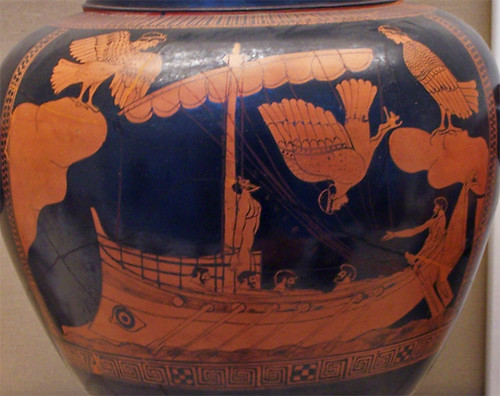
At the end of Book X, following great suffering and hardship, Odysseus' men finally believe they will set sail for home. But the way back to Ithaca not to be a simple one.  Odysseus learns (from Circe, the witch) he must consult with the spirit of the blind prophet Tiresias to learn the route home.  For his men, knowing that they are finally going home but realising that they must do so by such a painful circuitous route precipitates hair pulling behaviour.


"The men were broken-hearted as they heard me, and threw themselves on the ground groaning and tearing their hair, but they did not mend
matters by crying. When we reached the sea shore, weeping and lamenting
our fate, Circe brought the ram and the ewe, and we made them fast
hard by the ship. She passed through the midst of us without our knowing
it, for who can see the comings and goings of a god, if the god does
not wish to be seen?

The first inference of this quote is that hair pulling is being practised to produce a cathartic effect, so that the extra pain of yanking hairs will magnify their distress to a high point, after which it will be alleviated.  In other words, by raising their pain levels over and beyond that which has been caused by their disappointment some kind of benefit is expected.  Alternatively, hair pulling occurs unconsciously but the body aims at the same effect.  If unconscious, which seems most likely, the pulling seem sto stem from the postponement of the fulfillment of their desire.   The goal of returning home remains but gratification has been postponed and it is the sense of being thwarted when the end seemed so close that appears significant here.   Maybe the sailors’ sufferings would be less great if the possibility of returning home had never been dangled so agonisingly in front of them.  For this would have led to acceptance and resignation of the kind that will allow for some kind of adaptive response.  But here, the men are caught in two minds - unable to cease dreaming of home and yet unable to realise this dream.  It is this contradiction in their minds that appears to facilitate hair pulling.

The other mention of hair pulling in The Odyssey features in Book XXIV, when Agamemnon's ghost and that of Achilles argue over who had the better death.  Agamemnon recalls how:

We fought the whole of the livelong day, nor should
we ever have left off if Jove had not sent a hurricane to stay us.
Then, when we had borne you to the ships out of the fray, we laid
you on your bed and cleansed your fair skin with warm water and with
ointments. The Danaans tore their hair and wept bitterly round about
you.

 Therefore, in both The Odyssey and The Iliad, hair pulling emerges as a means by which (a) energy is either discharged cathartically or (b) a means by which neurochemical change occurs that ultimately produces a state of calm and from this more constructive and considered actions may ensue. Since The Odyssey is not a work of psychology, Homer probably uses hair pulling as something of a dramatic cliche - for his audience would have instantly identified with the passion and tension that any reference to hair pulling implied.

More examples of hair pulling and self directed behaviour in ancient literature will follow in later posts.

Saturday, 7 December 2013

Hair pulling in ancient literature - Part Two: Homer's Iliad

Hair pulling behaviour is frequently manifested by characters in Homer's Iliad and Odyssey, particularly at times of great emotional stress.  In this blog page we look at hair pulling in The Iliad.

The Iliad (800 B.C.)
In Book X  line 15, Agamemnon pulls out his hair in desperation at the plight he faces.  Unable to sleep, his mind is in torment.  He is caught between dishonourable retreat to Greece, where he will face shame and ignimony, and staying to fight to almost certain death against the Trojans:

"When he looked upon the plain of Troy he marvelled at the many watchfires burning in front of Ilius, and at the sound of pipes and flutes and of the hum of men, but when presently he turned towards the ships and hosts of the Achaeans, he tore his hair by handfuls before Jove on high, and groaned aloud for the very disquietness of his soul."

Preceding the hair pulling, Agamemnon realises that Jove has favoured his foes' sacrifices to the gods over his own. Sleep alludes him as he experiences restlessness and anxiety. In other words, the transition to a sleep state has been disrupted by an internal conflict from which Agamemnon can find neither escape (into unconsciousness) nor a resolution (cognitive dissonance).  Hair pulling appears to constitute some mode of an outlet where no other seems possible.
  
In Book XVIII Achilles responds to news of Patroclus's death, his great comrade in arms, with an extreme display of grief :        

"A dark cloud of grief fell upon Achilles as he listened. He filled both hands with dust from off the ground,  and poured it over his head, disfiguring his comely face, and letting the refuse settle over his shirt so fair  and new. He flung himself down all huge and hugely at full length, and tore his hair with his hands. "

Unlike with Ezra of the Old Testament, hair pulling here is preceded by a ritual of pouring of dirt and dust over his head, face and clothing.  It appears that Achilles is acting in obeyance with a funereal tradition whereby hair is shorn in respect for the dead.  Hair tearing was a formal component of mourning in classical Greece and was often accompanied by head beating.  (Encyclopedia of Hair: A Cultural History By Victoria Sherrow, p.277 2006)  Since a loud display of grief was deemed respectful to the departed, it is likely that hair pulling was painful enough to facilitate the required audible wailing and groaning effects.  It also the case that a dishevelled appearance of ruffled or unkempt hair was an outward sign of loss and grief so that pulling hair or lowering one's hair were both practised in ancient Rome also.  Later in Book XXIII, Patroclus' comrades cover him with locks of their hair after which Achilles cuts a lock of his own hair and places it in the hand of the dead Patroclus as he lays on his funeral pyre.
    In Book XXII Hector's parents tear their hair.  Priam does so when beseeching his son to withdraw from a confrontion with Achilles, whose mother is a water nymph, and who is divinely protected as a consequence.  The pulling is a sincerity signal intended to publically communicate the severity of distress.  

"The old man tore his grey hair as he spoke, but he moved not the heart of Hector."


As expected Achilles defeats Hector and in revenge for the loss of his dear comrade Patroclus, proceeds to disrespect the body by dragging it behind his chariot:

"Thus was the head of Hector being dishonoured in the dust. His mother tore her hair, and flung her veil from her with a loud cry as shelooked upon her son. His father made piteous moan, and throughout the city the people fell to weeping and wailing."

It is notable that this behaviour is not copied by Priam, her husband, following Hector's death, suggesting that public displays of hair pulling was predominantly a mode of female grief expression.  Finally in Book XXIV the body of Hector is restored to Troy after Achilles relents in his anger and accepts ransom for the body.  As it enters the city gate the womenfolk again demonstrate hair tearing, signalling themselves as chief mouners through this and, no doubt, the intensity of their wailing above all other mourners present:

"Clasping Hector’s head, they wailed and tore their hair, while the great host of people wept."

     So, we can infer a number of things from these passages. Firstly, hair pulling was a ritual that marked great public displays of grief and served as a sincerity signal to all those watching on - for who would pull out their hair unless their emotion and feeling were genuine?.  But hair pulling also occurs when people are caught in two minds - or between two states of being and can find no easy resolution to their internal state of struggle.  I find these references incredible because they reveal a side of human psychology and behaviour that modern life has forgotten.  Perhaps people who pull out their hair are expressing behaviours that would once have been more naturally perceived and have been more publically acceptable in years gone by.