Sunday, 27 April 2014

When Mental Algorithms Go Wrong...

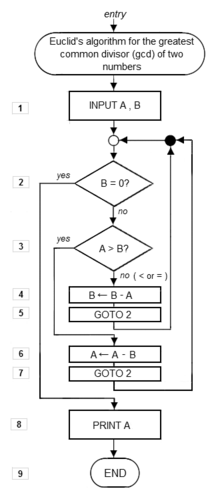
Evolutionary psychologists tend to view the mind as a kind of computer that runs algorithms that help us make decisions based on sensory input from the environment and an internal assessment of our physiological condition.  These are called tradeoffs and we make them all the time.  For example, do you continue safely in a job you hate, even though it gives you security? Or do you quit and pursue your dream to be a Hollywood actor with a massive payoff if you succeed - but the poverty line if you don't.  I am being a bit facetious here, of course.  But time/resources/energy/risk tolerance are all factors in decisions that have been made by our ancestor's since human history began.

Hunter-gathers make tradeoffs in terms of how much time they will give to hunting, to spending time with family, to forming social alliances...(sound familiar) and the mind has evolved to allow us to compute these things.  In modern day life businessmen do the same, allocating company funds for investing in research and development, marketing etc.  Indeed, capitalism is all about employing algorithms to maximise financial surplus.

But what has all of this to do with psychology?  Well, if the human mind is a sort of computer that uses its own form of algorithms to make decisions then 'normal' behaviour can be defined by how well those calculations suit the circumstances in which they are employed.  'Stupid' behaviour fits within a normal range, and after a few glasses of wine we are often apt to make decision we regret because we do not properly take in all the information or consider all the angles or give equal weight to various considerations.  But even daft decisions can be intelligible in the context they are made, so that we might forgive someone who offers the excuse, 'But I was really drunk at the time!'

So, what about 'insane' behaviour?  Well, this would mean that a decision someone made or an act they performed would be hard to fathom.  No rational basis might be discerned for it.  Indeed, the action may be one that seems totally ill-suited to the context in which it occurs or is one where the algorithm used may be an inversion of one which would normally serve survival.  For example, what if someone was making business decisions that maximised expenditure and minimised profit margins as much as possible?  Or what if someone decided to use time as inefficiently as possible to achieve an objective that could be achieved much faster?  Well, you might argue these people were aiming for these purposes - perhaps trying to ruin the company or dragging their heels to procrastinate and put off doing something that they wished to avoid.  Fair enough.  But what if this algorithm of inefficiency were applied to all their actions?

It is interesting to view all behaviours, including ones which are in the realm of abnormal psychology, as algorithms gone wrong.  Hair pulling, for example, is a kind of hunting for lipid fat roots whereby the puller aims to maximise the fat gained by selecting the most profitable hairs.  Viewed this way hair pulling constitutes an algorithm normally applied to resource finding but which is being misapplied to the body.  One reason this might occur is because the individual finds itself in an unstable or unpredictable environment and to combat this the mind rechannels an algorithm that is normally directed towards the world towards the body instead.  And after this calm can be achieved because a reward can be reliably obtained from specific manipulations, i.e. control is restored.

 By viewing abnormal behaviours in terms of the reward versus time/energy consumed/context applied to, it may be possible to view abnormality in terms of mental calculations which have gone awry in some way.  This may mean they are compensating for environmental instability in which no clear and reliable optimal strategy for obtaining resources or social attachments can be identified. 

Unless someone intercedes and helps supply new environmental information that changes a person's perspective on their world, or provides cognitive support so that an adaptive application of the algorithm can be found, the problems may persist.
 

Sunday, 20 April 2014

is hair texture a factor in hair pulling?

Are fine, straight hairs less pulled?
Before people pull out a hair it is common for them to go through a process of searching for the right one to extract. I call this 'the audition'. Auditioning for the right hair means locating one that 'feels right'. Hair pullers seek out a strand that is satisfyingly kinked, or wiry or curled. This preference means that there must be hairs that are clearly less attractive to them and which remain unextracted. These tend to be fine, straight hairs that do not pass the audition process.


The favourite area to pull from for people who pull out head hairs is a region of the scalp called the vertex, which is at the top of the head and where most men naturally manifest hair loss.  However, less common areas for pulling are at the very front or those areas close to the sides where the hairline meets the skin regions. Why is this?


One answer I would suggest is that straight, fine hairs on the border of where hair meets skin do not produce fatty roots. The oily sebum yielding roots come from more central areas of the scalp and this is a major reason for pulling from those areas. Indeed, Mansueto (1990) has noted that procurement of hair roots provides a strong incentive for pulling, with 43% of TTM subjects acknowledging that they manipulate the hair/hair root.


It is only my theory, but one experiment would be to use water or gel in order to smoothen the hair and give it a straighter, finer texture than usual. This might interfere with the auditioning process by removing the kinks and wiry texture from hairs which trigger the pulling. Maybe someone has tried this already. If so, get in touch and say how it went.

Sunday, 13 April 2014

What the ancient Greeks teach us about hair pulling

Hair pulling behaviour features quite a lot in ancient Greek literature - as anyone checking out this blog will know - and it is interesting to note that two forms of hair pulling are revealed.

One form of hair pulling is ritualistic - hair pulling that would have been conducted at funerals or at times of intense grief as a consciously performed social act. Indeed, as the body of the deceased was paraded or displayed family and loved ones would have yanked and pulled out hairs as an expression of their grief and inner pain. In many respects such behaviour served as a sincerity signal, whereby the pain of yanking out hair would reveal the genuine nature of the grief being felt as it is not something you would do for the sake of someone you didn't feel strongly about.  

Of course, this raises the question as to why a public display of hair pulling would emerge as an expression of grief?   In my view there are two reasons.  Firstly, inflicting pain on oneself releases endorphins, the body's own natural pain killers.  So on some level the mourner is attempting to inflict intense pain on himself as a way of triggering endorphin release and reduce the pain of his grief.  Using hair to do this does not involve causing any real damage to the body, but does produce a dishevelled appearance that socially marks him as a mourner to onlookers.  The second reason is that hair pulling is a behaviour that humans have always manifested, and is recorded in Hippocrates writings (see this site for more information on Hippocrates' notes on hair pulling).  In this respect, the mourners can be viewed as enacting a behaviour that is associated with intense distress and psychological frustration.

These days people do not pull out their hair at funerals because hair pulling itself is very little known and has lost its cultural significance.  However, it remains far more common than the statistics of official reported cases would have us believe.  Indeed, it has always been part of the human repertoire of body-directed actions that the Greeks were the first to record.  I like the fact that what is so little known of today was once a common spectacle among the ancient Greeks.


Sunday, 6 April 2014

Hair Pulling in Ancient Literature - Part 5: Aesop

In Aesop's The Miser (6th Century B.C.) a money hoarder hides a lump of gold in a hole for safety.  Unfortunately for him someone has spied his digging and steals the treasure.  On discovering the theft the miser reacts by pulling his hair out.  

The Miser, on his next visit, found the hole empty and
began to tear his hair and to make loud lamentations...

The advice of his neighbour, to replace the gold with a stone and forget about the theft, is the offered solution to the problem and proffered remedy for the miser's hair pulling behaviour.  But this advice is insufficient to help the miser cope with his object loss.  Indeed, the hoarding behaviour is symptomatic of comfort seeking and suggests the miser  already has underlying psychological issues that cannot be so easily resolved.  With the gold gone, and with it the miser's artificial sense of security, he is now especially prone to manifesting self-directed comfort seeking behaviour.

Ongoing conflicts that a person can find no solution or resolution to is characteristic of people who pull hair.  The puller is unconscious of the conflict that underlies pulling because if s/he were conscious of it the pulling might be allayed.  So the advice for the miser to forget about the theft and negate the problem rather than to accept and live with the painful loss is not helpful at all.  Only by ending the conflict - by ceasing to long for the return of something that will never be replaced and finding a new means to emotional security will the problem be addressed.


Sunday, 30 March 2014

Hair Pulling In Ancient Literature - Part 4: Aristotle


Aristotle is a central figure in Western thought whose writings have shaped scientific and philosophical of our culture.  Interestingly, heo contributed to zoology in A History of Animals.  In it he focuses on hair and also hair plucking.  In the following passage Aristotle describes hair pulling and hair root extraction in a way that reveals he is talking from direct experience.

Hairs if plucked out before maturity grow again; but they do not grow again if plucked out afterwards. Every hair is supplied with a mucous
moisture at its root, and immediately after being plucked out it can lift light articles if it touch them with this mucous.
(Book 3, Part 11)

The final comment about the mucous moistness of lipid fat hair roots is something that many hair pullers would instantly recognise and is one of the most fascinating aspects of hair pulling to my mind.  Hair pullers develop a very intimate relationship with hair roots, which they explore orally.  Licking, sucking, tooth combing and eating roots is a central component of the hair pulling sequence and one that is often not mentioned very much because doctors focus more on hair extraction itself and its consequences, i.e. bald patches.  The white root, which Aristotle describes as have 'mucous moisture' is something of an edible delicacy to people with trichotillomania and the moist white lipid fat greedily consumed.  

Why is the lipid fat eaten and prized by hair pullers?  No one seems to know.  All we know is that the eating aspect forms an integral part of the cycle or sequence the behaviour.  Some psychologists have offered a symbolic interpretation - that the root represents the mother's breast.  But there is no way to verify this.  All we know is that the root offers comfort and also provides the appetitive reward that ensures the hair pulling cycle is endlessly repeated.  

All behaviours need a pay-off - appetitive or sexual - if they are to continue.  Maybe the hair root provides it.  Aristotle captures well the moist attraction of hair roots.

Sunday, 23 March 2014

I'm a nomadic hunter gatherer...Get me out of here!

Home sweet home?  A settled (sedentary) lifestyle which replaced nomadism.
A major theme of this blog is what happens to organisms that are trapped or confined and unable to adapt to the situation they find themselves in.

A recent lecture by distinguished archaeologist Prof. Robert L. Kelly of Wyoming University outlined some of the reasons that led humans to give up their nomadic (roaming) way of life and become sedentary (staying in one place). 

Why is this line of enquiry important? Because historically humans have dealt with problems such as overcrowding, stresses related to food security and social inequality by simply getting up and moving on to some place new.  But if you can't change your environment you are forced to live in a situation where the pressures and stresses are ongoing - perhaps with no hope in sight.  

In such cases young organisms are especially vulnerable to psychological and physiological stresses that can produce self-directed behaviours. 

The main reason humans gave up on their roaming way of life is that we ran out of space - it was impossible to move on without encroaching on the territory of another group or tribe, according to Professor Kelly.  So you would have to be in a fairly desperate state (i.e. starving) for the conflict that comes with taking new lands to be worth the risks involved.

Robert Kelly outlined another major problem of having to remain in one location - you have to work harder to maintain the same standard of living.  Resources become more scarce and the land less fertile over time.  As a result women (who did the gathering) had to work harder and children were reared by their siblings and peers whilst mum was out labouring.  In time, slavery and loss of autonomy would follow as more and more labour was needed to keep production high.  This meant forcing people to remain in a situation that tested them to the psychological limits.  Another aspect of remaining in one place was that over time the population rose and with population pressure people became more aggressive and competitive towards the resources that were available.

Of course, the loss of the nomadic lifestyle had benefits too.  There would be less disease, food production would be streamlined and cultural advances would follow too.  But at a cost...

In modern life humans trapped in psychologically stressful situations can rarely solve the problem by walking away and starting afresh some place new.  Ongoing stresses relating to mortgage payments and job security mean families under pressure usually suffer a lot. Also families and social support networks are less strong once people are not living in smaller groups where people are more dependent on one another for survival.  In large settled towns people can come to feel isolated, powerless and insecure.  It also means that adaptive mechanisms that served our survival and well-being are less effective.  Regulating safety and comfort via approach v. withdraw behaviour is much more difficult if the dangers are embedded within an environment that you cannot escape from, e.g. a ghetto or a slum.  Social life means goal states (such as seeking comfort, safety, food security etc.) need to be negotiated socially, which places greater stress on attachments and social bonds.  If these relationships go wrong, due to illness or poverty there is a greater chance of self-directed behaviours emerging in my view. 

A sedentary lifestyle is clearly a source of great stress and though this state of affairs may be historically inevitable it must be remembered that our psychology was shaped by our nomadic past. This mismatch between where we historically came from and where we are now is fertile ground for evolutionary psychologists wishing to understand many abnormal behaviours that fall under the label of obsessive compulsive disorder, displacement behaviour, eating disorders etc.

References:
Prof. Robert L. Kelly,  (2013):  The Lifeways of Hunter-Gatherers: The Foraging Spectrum (Cambridge University Press)


Saturday, 15 March 2014

Hollywood and...er hair pulling?

Sam Peckinpah's 1970s western which features a hair tugging scene


Noted for his aesthetic of violence, hard drinking and not too gentle use of actors and animals, the movies of Sam Peckinpah are some of my personal favourites. The depiction of men struggling to survive in harsh landscapes, of males co-operating as well as competing and a whole catalogue of  characters from the low down and mean to the brave and stoically noble make his films a rich experience.

A friend bought me a DVD copy of Pat Garret And Billy The Kid a while ago and this week I got to watch it...it had been a long time since I had last seen it (VHS era). One hour and 20 minutes in I was really amazed by the use of hair tugging in one particular scene which perfectly fitted with the notion of this behaviour as a displacement action.

The plot leading up to the hair tugging is briefly this...A big landowner called Chisholm is buying up whole swathes of land to graze his cattle. It is the beginning of a new capitalist era in America – the big money is moving in and turning everyone who once lived freely on the land into salary men and tenants. A few men refuse to be reined in and aim to keep to the old way of life – which consists of living off the land (i.e. killing animals to eat), wandering freely without heed of fences and generally having a grand ol' time. Once such man is Billy The Kid. However, his former friend and mentor Pat Garret, has decided to give up the old life and for the sake of financial security has signed up to be a law man - paid to bring in outlaws and generally tame the west.

Pat Garret travels around in search of Billy. And one hour 20 minutes into the film is in a bar when three of Billy's associates enter (one of whom is Bob Dylan, or Alias). He commands Alias to knock out one of his colleagues with the butt of a rifle before ordering him (he calls Alias 'boy') to read from a shelf of canned food labels (it is one of the the most famous scenes of the film, with Bob Dylan reading out, 'beans', 'quality plums' and 'finest quality...beans' in the background). Pat Garret is then left to sit down and play a few 'friendly' hands of cards with the remaining cowboy, who hequestions about Billy's whereabouts.

As the situation gets more intense and the tension rises Billy's associate itches to go for his knife (Garret has already confiscated his gun). And yet he knows he must bide his time. This sets up an inner conflict whereby he wishes to kill Garret but must also oppose this impulse until the moment is right. At this point he begins to play with his hair, gently tugging at strands in a way that people diagnosed with trichotillomania might recognise. Pat Garret clearly understands human body language because as soon as he sees the displacement behaviour emerge he instantly knows that his opponent is caught in two minds. Being a natural dislacement behaviour, as opposed to a stereotypical behaviour Garret also realises that the hair pulling marks a temporary transitional state and is a precursor to the cowboy making his move. The eyes of Garret (played by James Coburn) widen as he watches intensely, waiting for the slightest sign that a move will be made – and soon it comes. The hair tugger suddenly goes for his knife but no sooner than it is drawn Garret shoots his opponent down. From a psychological perspective it is a brilliant scene and the only one I have ever seen where hair pulling features in a meaningful way.

Coburn, Dylan, Kristofferson, Peckinpah...displacement behaviour...wonderful! It is just a shame that they don't make them like that any more.